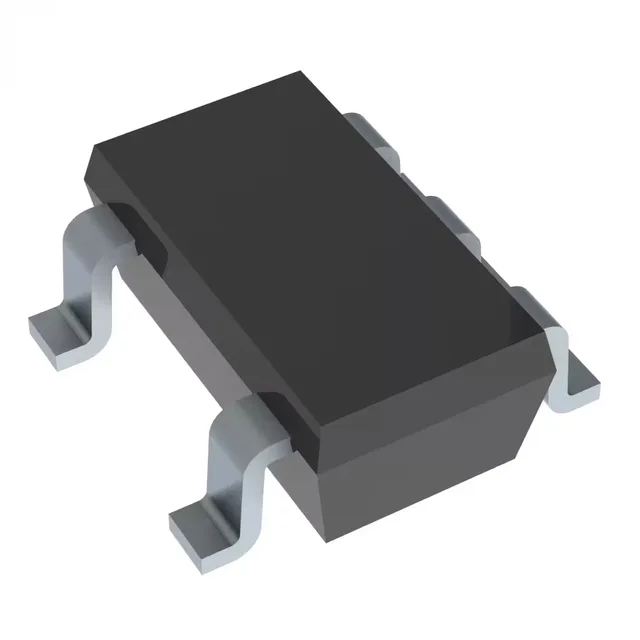
Texas Instruments SN74LVC1G07DBVTG4 — Interface & Transceivers

SN74LVC1G07DBVTG4 Buffer, Non-Inverting, Open Drain

MPNSN74LVC1G07DBVTG4
End of Life

Texas Instruments 74LVC series, Buffer, Non-Inverting, 1 element, 1 bit per element, open drain output, -40°C to 125°C, 1.65V to 5.5V, SOT-23-5 package.

$0.9300Ref. price · indicative, final on quote
Independent supplier — new & surplus stockAuthenticity-screened · ESD-safe packingListing updated Aug 2026

Specifications

SN74LVC1G07DBVTG4 specifications
ParameterValue
Series74LVC
Logic typeBuffer, Non-Inverting
Output typeOpen Drain
MountingSurface Mount
Supply voltage1.65V ~ 5.5V
Current - output high, low-, 32mA
Operating temperature-40°C~125°C(TA)
PackageTape & Reel (TR); Cut Tape (CT)
CaseSC-74A, SOT-753
Number of elements1
Number of bits per element1

Product details

Single-gate open-drain buffer for mixed-voltage and wired-OR buses

The Texas Instruments SN74LVC1G07DBVTG4 is a single-gate buffer from the 74LVC family with a non-inverting, open-drain output. The open-drain output sinks up to 32 mA but does not source current — the load pulls the output high through an external resistor, which is the standard approach for wired-OR interrupt lines, I²C-style buses, or driving low-side loads like indicator LEDs. The single-element, single-bit-per-element configuration means one buffer per package — useful when you need exactly one open-drain stage without wasting a multi-gate device.

Open-drain output — what 32 mA sink means for the BOM

The 32 mA sink capability lets this buffer drive a heavier pull-down than a typical logic output — useful when discharging bus capacitance quickly or driving a low-impedance load.

Active lifecycle — no near-term BOM risk

For a production BOM, this means there is no last-time-buy horizon or obsolescence notice to plan around.

Frequently asked questions

What is an open-drain output?

An open-drain output can pull the output low (sink current) but cannot drive it high. An external pull-up resistor to the desired high-level voltage is required. This configuration allows multiple open-drain outputs to be connected to the same line (wired-OR) without contention, and it enables level translation because the pull-up voltage can be different from the buffer's supply voltage.