Quad NAND with Schmitt trigger — the noise-immune workhorse
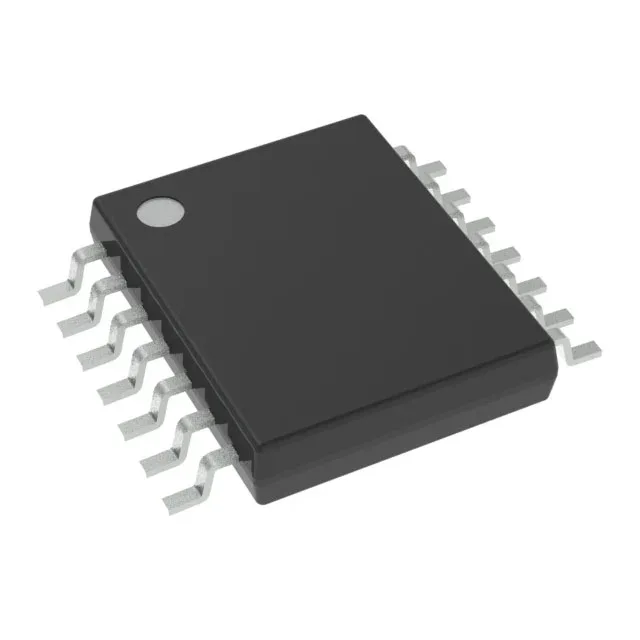
The SN74LV132APW is a Texas Instruments quad 2-input NAND gate from the 74LV series, with Schmitt-trigger inputs on all four gates. That Schmitt action means the input thresholds are hysteresis-controlled — 0.75V to 1.5V for a low, 1.75V to 3.5V for a high — so a noisy or slowly rising signal won't cause multiple output edges the way a plain 74LV00 would. It lives in a 14-TSSOP package (0.173" wide, 4.40mm body), surface-mount, and the tube format is what you'd expect for prototype or low-volume rework. Quiescent current maxes at 20 µA, so it's not going to heat up the board.
Output drive and timing — what the 12mA figure means for your bus
The propagation delay is 9.7ns max at 5V with a 50pF load — that's the spec you care about when clocking data across a backplane or through a long trace. At 3.3V the delay will be a bit higher, but the Schmitt inputs help maintain clean edges even with a slow rise time from the driving stage. The 2-input-per-gate configuration (four independent gates in one package) is the standard NAND building block for glue logic, debounce circuits, or oscillator feedback paths. The Schmitt trigger on every input means you can use it to square up a noisy sensor signal or a pushbutton contact without an external RC filter.
Because it's an active part, there's no last-time-buy pressure and no forced migration to a successor. The 74LV family is mature but still widely used in cost-sensitive, low-voltage logic applications.