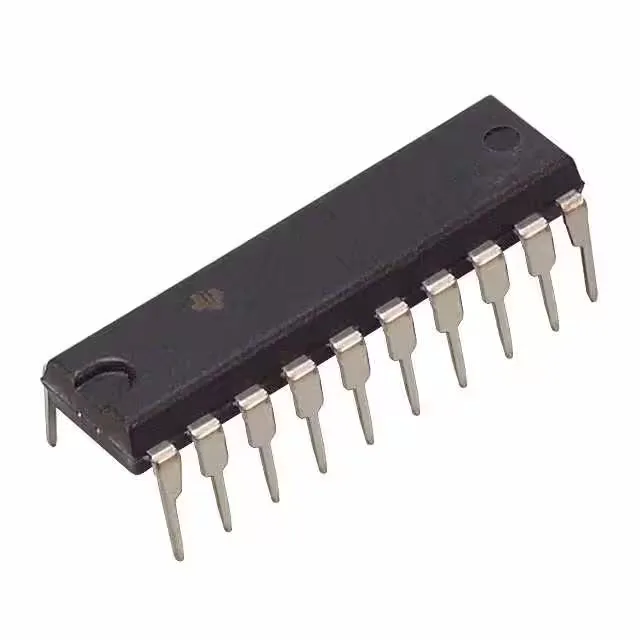
Texas Instruments SN74HC240N — Memory (DRAM / SRAM / Flash / EEPROM)

SN74HC240N 74HC Inverting Buffer, 3‑State, 20‑DIP, Active

MPNSN74HC240N
End of Life

Texas Instruments 74HC series, Buffer, Inverting, 3-State, 2V ~ 6V supply, -40°C ~ 85°C, Through Hole 20-DIP (0.300", 7.62mm), 20-PDIP, Tube.

$0.89Ref. price · indicative, final on quote
Packaging20-DIP (0.300", 7.62mm)
StockContact for availability
MOQ1 pcs
  • 100% new & originalTraceable channels only — no refurbs, no pulls, no remarked parts.
  • Date & lot codes on quoteStated per line before you commit; label photos on request.
  • MSL-compliant ESD packingMoisture-sealed bags with indicator cards; reels photo-verified.
  • PayPal buyer protectionPay by T/T, PayPal or Payoneer — card payments covered end to end.

Specifications

SN74HC240N Technical Specifications
ParameterValue
Series74HC
Logic typeBuffer, Inverting
Output type3-State
Mounting typeThrough Hole
Voltage2V ~ 6V
Current - output high, low7.8mA, 7.8mA
Operating temperature-40°C ~ 85°C (TA)
PackageTube
Case20-DIP (0.300\", 7.62mm)
Number of elements2
Number of bits per element4

Product details

Octal inverting buffer with 3‑state outputs – what it is and where it fits

The Texas Instruments SN74HC240N is an octal inverting buffer with 3‑state outputs from the 74HC logic family. It operates from a 2V to 6V supply rail, making it compatible with both 3.3V and 5V logic systems. The two elements each handle four bits, giving eight total channels of inverting buffering with independent output enable control. The 3‑state outputs allow multiple devices to share a common bus – the outputs go high‑impedance when disabled, which is standard for memory address lines, data buses, and multiplexed I/O in industrial controllers and telecom line cards. The industrial temperature range (-40°C to 85°C) suits it for factory automation, outdoor networking gear, and HVAC panels where the ambient can swing well past commercial limits.

Supply voltage and output drive – what the ratings mean for the BOM

The 2V to 6V supply range is the key selection parameter. At 5V the part runs directly off a standard logic rail; at 3.3V it interfaces with lower‑voltage FPGAs or MCUs without a level shifter. The symmetric 7.8 mA high/low output current is modest – enough to drive one or two CMOS inputs or a low‑power LED indicator, but not a relay coil or a long backplane trace. For bus‑driving applications with higher fan‑out, a 74ABT or 74LVTH part (like the SN74ABT2245DW with 32 mA drive) would be the next tier up. The inverting output means this is not a drop‑in for a non‑inverting buffer – verify the logic sense in the schematic before ordering.

Frequently asked questions

Where can I buy SN74HC240N with immediate stock?

SN74HC240N is available through independent distribution. Submit an RFQ on this page for current pricing and stock confirmation – availability is confirmed at quote time, not before.

What is the difference between 74HC240 and 74HC244?

The 74HC240 is an inverting buffer; the 74HC244 is a non‑inverting buffer. Both are octal 3‑state buffers in the same pinout. Choose the 74HC240 when the bus needs an inversion; choose the 74HC244 when the signal polarity must be preserved.

Can SN74HC240N replace a 74LS240?

Yes, in most applications. The 74HC240 has a wider supply range (2V‑6V vs 4.75V‑5.25V for LS), lower power consumption, and the same logic function and pinout. The output drive is lower (7.8 mA vs 24 mA for LS), so check the fan‑out requirements – if the load exceeds 7.8 mA, a 74HCT240 or a bus‑driver family may be needed.

What are the temperature ratings and supply voltage range for SN74HC240N?

Operating temperature is -40°C to 85°C. Supply voltage range is 2V to 6V. This covers industrial environments and mixed‑voltage logic designs.

How do I get current pricing and availability for SN74HC240N?

Submit an RFQ through this page. Pricing and stock are confirmed at quote time based on independent‑distribution sourcing. No automated price or stock count is displayed because availability shifts daily.