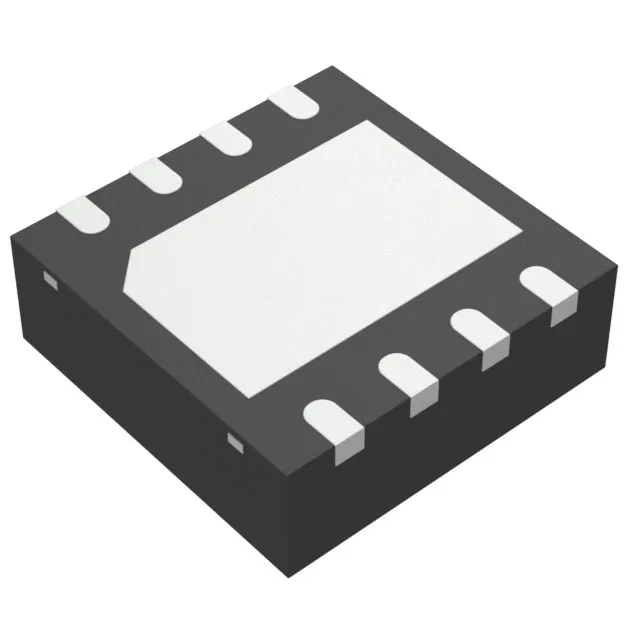
It handles one driver and one receiver on a single 3.3V supply rail (3V to 3.6V) and pushes data at 50 Mbps — fast enough for high-speed industrial backplanes, motor-drive encoder links, and building-automation fieldbus nodes.
50 Mbps and 80 mV hysteresis — what they mean on the bus
At 50 Mbps the SN65HVD78DRBR keeps the bit period under 20 ns, so it can drive short, point-to-point RS-422 links at full speed or drop to lower rates on longer RS-485 multi-drop runs. The 80 mV receiver hysteresis gives 40 mV of noise margin above the standard 200 mV differential threshold — useful on a noisy factory floor where common-mode shifts from motor drives can blur the idle bus. That margin means fewer false start bits and less software retry overhead.
3.3V supply — not 5V tolerant
This part runs on 3V to 3.6V only. The bus pins are not 5V tolerant, so if the rest of the system uses 5V logic or a 5V transceiver on the same twisted pair, you need level translation or a different transceiver. For a pure 3.3V backplane or a 3.3V microcontroller UART, it connects directly — no external regulator or level shifter needed.