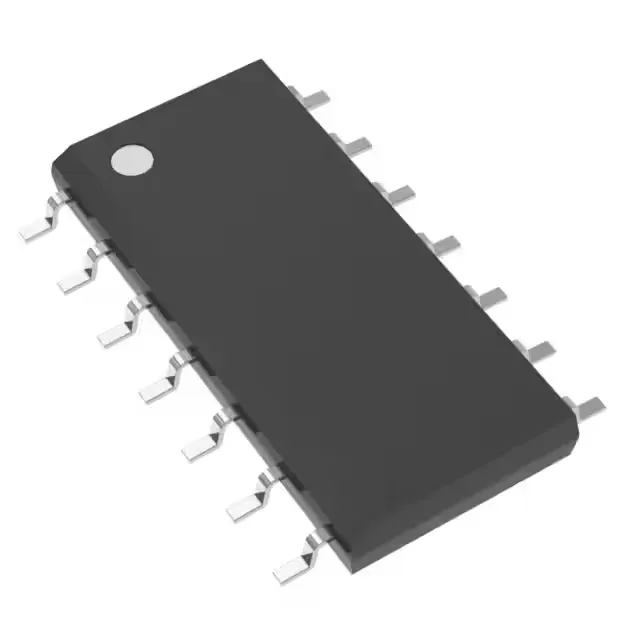
Full-duplex means separate twisted pairs for TX and RX, so the bus wiring needs four wires instead of two — a detail that catches teams migrating from half-duplex designs. The 400 kbps data rate is a mid-speed industrial rate: fast enough for most PLC-to-sensor links and building-automation loops, but not so fast that cable termination becomes critical at short runs.
125°C rating — where this part goes and where it doesn't
The 125°C junction rating gives headroom for self-heating at the 400 kbps switching rate. If your design stays below 85°C ambient, the thermal margin is generous; if you are pushing 125°C ambient, verify that the total power dissipation stays within the package limits at the full supply voltage.
For a procurement buyer qualifying this into a production BOM, there is no imminent obsolescence risk. The base product number 65HVD70 covers several speed and package variants, so if a future design needs a different data rate or a smaller package, a pin-compatible sibling within the family is a straightforward swap without a board respin.
Receiver hysteresis — why 70 mV matters on a noisy bus
The receiver hysteresis is specified at 70 mV. This is the voltage gap between the switching thresholds — it prevents the output from chattering when the differential bus signal is slow or noisy. On a long cable run in an industrial environment with motor drives or VFDs nearby, that 70 mV of hysteresis is what keeps the UART from seeing false edges. A part with lower hysteresis (e.g., 30 mV) would need cleaner signal conditioning or shorter stubs.