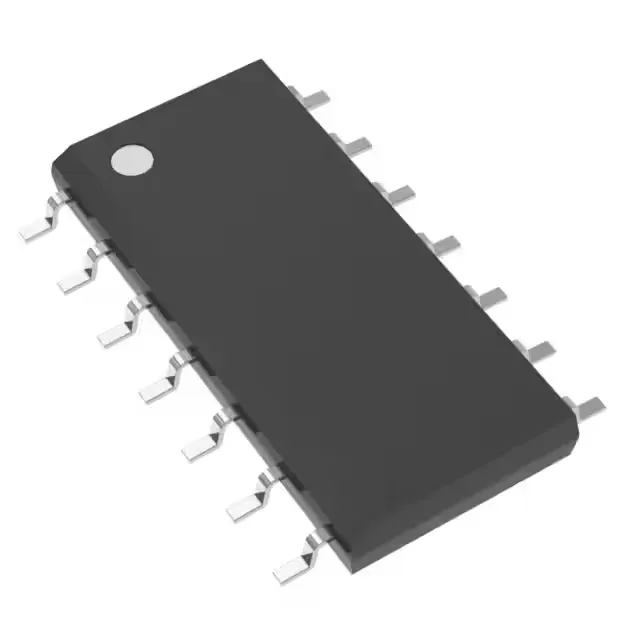
What this transceiver does on the bus
The Texas Instruments SN65HVD55D is a full-duplex RS-422/RS-485 transceiver in a 14-SOIC package, rated for 1 Mbps signaling on differential buses.
Full-duplex vs. half-duplex wiring
Because this is a full-duplex part (separate driver and receiver pairs), it uses four wires on the bus — two for transmit, two for receive. That is the right choice for point-to-point links where the host and remote talk simultaneously, such as encoder feedback or multi-drop polled networks where the master listens while driving. If your design calls for a two-wire half-duplex bus (shared pair, direction toggled by a DE pin), this part still works: tie the receiver outputs to the driver inputs externally and control DE. The 1 Mbps data rate is the ceiling; at that speed, cable length should be kept under roughly 400 feet for reliable edge detection, derating with longer runs.
That means it remains a valid choice for new BOM entries and production builds without an imminent obsolescence risk. For second-source flexibility, the 65HVD55 family includes several speed and package variants; the closest pin-compatible sibling within the same 14-SOIC footprint is the SN65HVD54D (half-duplex, same supply and temp range) if your bus topology changes later.
Sourcing this part for your BOM
For a production BOM line, submit an RFQ with your annual volume and target price; the quote will reflect the multi-source supply base for this active TI transceiver.