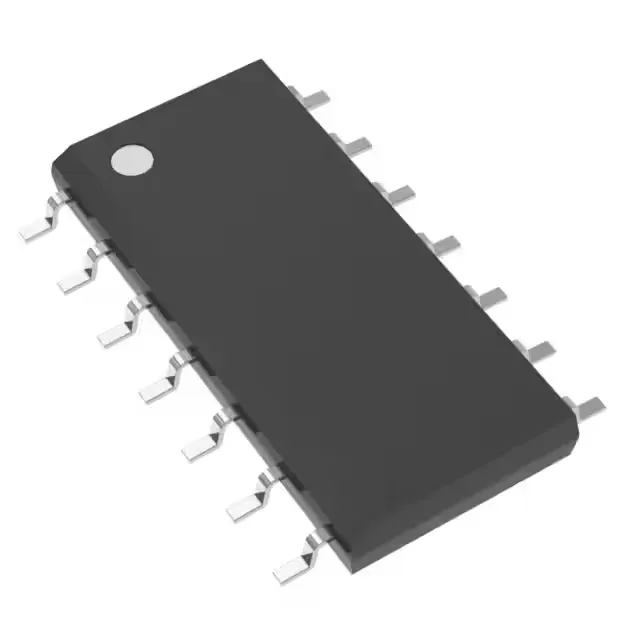
It packs one driver and one receiver into the 14-pin body — the full-duplex pair you need for a point-to-point or multi-drop serial link that talks and listens simultaneously. This is a current-production part, so the BOM line carries no end-of-life pressure.
Sourcing a genuine SN65HVD54D — date-code trace matters on RS-485 parts
That said, RS-485 transceivers are a common target for re-marked or relabeled gray-market stock, especially when the order volume runs into reel quantities. The laser-etch font and package marking on a genuine SN65HVD54D should match TI's plant-specific date-code format. We source through independent distribution with lot traceability; the date-code and marking consistency is checked before the stock hits the quote. If you need a documented provenance chain for a quality audit, flag it on the RFQ.
The 5 V supply and what it rules out
If your system runs a 3.3 V rail and you are level-shifting or using a 3.3 V transceiver, this is not the part.
50 mV hysteresis — noise budget on the differential pair
The receiver hysteresis is specified at 50 mV. That is the dead band the differential comparator sees before it toggles — anything below that threshold is ignored, which keeps a floating or lightly loaded bus from chattering. In a motor-drive cabinet or on a long cable run near a VFD, that 50 mV buys you a few dB of margin before the data line starts seeing false edges. If your cable is routed past a switching supply, the hysteresis helps, but the layout still wants the twisted pair away from the power traces.