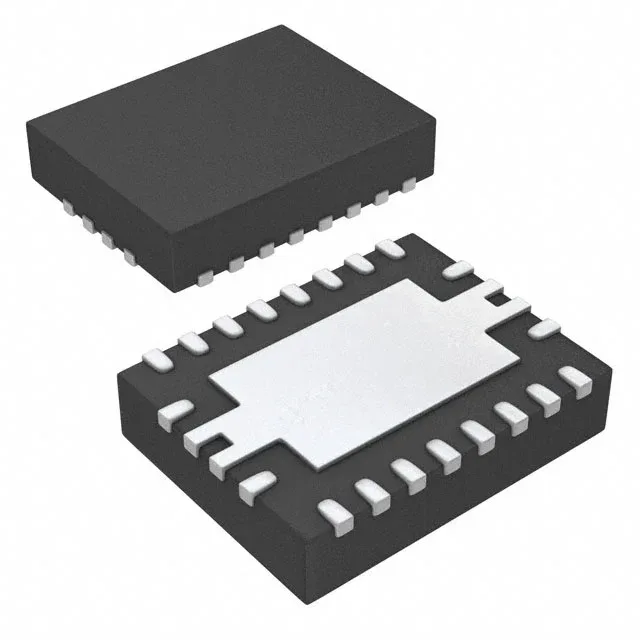
Texas Instruments SN65HVD33RHLT — Interface & Transceivers

Texas Instruments SN65HVD33RHLT RS485 Transceiver, 26 Mbps

MPNSN65HVD33RHLT
Active

Texas Instruments SN65HVD33RHLT RS422/RS485 transceiver, full duplex, 1/1 driver/receiver, 26 Mbps, 3V-3.6V supply, -40°C to 85°C, 20-VQFN (3.5x4.5) exposed pad, ROHS3 compliant.

$5.2500Ref. price · indicative, final on quote
Packaging20-VFQFN Exposed Pad
RoHSROHS3 Compliant
Independent supplier — new & surplus stockAuthenticity-screened · ESD-safe packingListing updated Aug 2026

Specifications

SN65HVD33RHLT specifications
ParameterValue
TypeTransceiver
MountingSurface Mount
Supply voltage3V ~ 3.6V
ProtocolRS422, RS485
Operating temperature-40°C~85°C
DuplexFull
PackageTape & Reel (TR); Cut Tape (CT)
Data rate26Mbps
Case20-VFQFN Exposed Pad
Receiver hysteresis50 mV
Number of drivers (Receivers)1/1

Product details

The SN65HVD33RHLT: ROHS3 compliant, so no exemption expiry to track for EU or global markets.

26 Mbps full-duplex RS485 — what the data rate means on the bus

Full-duplex operation means the SN65HVD33RHLT drives separate transmit and receive pairs simultaneously — useful for point-to-point RS422 links or multi-drop RS485 networks where the bus topology allows separate pairs. The 26 Mbps data rate is the raw signalling speed on the bus; actual throughput depends on cable length, termination, and the number of nodes. At 26 Mbps, stub lengths must be kept short (under a few inches) to avoid reflections. Built-in 50 mV receiver hysteresis provides noise margin on long cable runs — the threshold is high enough to reject coupled noise from adjacent power lines or motor drives without external filtering.

The 3.3V rail is common in mixed-signal systems; the part does not require a separate 5V supply, simplifying the power tree.

20-VQFN exposed-pad — board layout notes

Surface-mount only — no through-hole variant.

Frequently asked questions

What is the SN65HVD33RHLT used for?

It is a full-duplex RS422/RS485 transceiver with a single driver and single receiver, operating at up to 26 Mbps. Typical applications include industrial automation networks, building automation, motor drive communication, and any multi-drop serial bus requiring differential signalling.