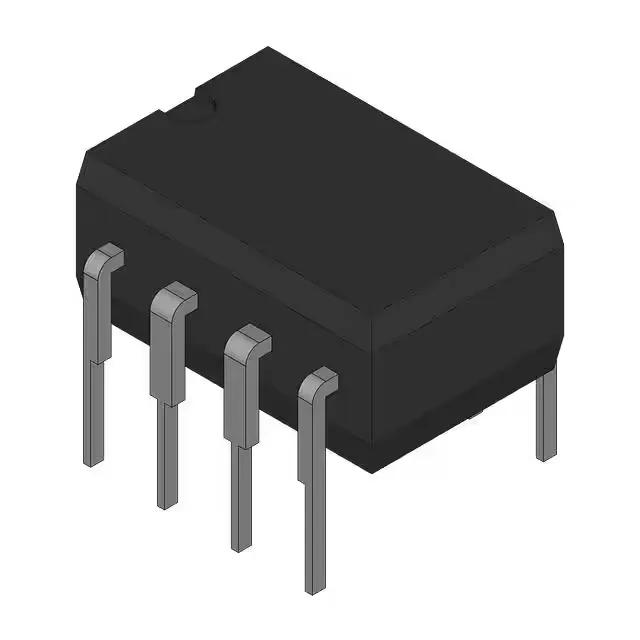
200 kbps half-duplex transceiver for 5V industrial buses
The 30 mV receiver hysteresis cleans up noisy bus signals common on long cable runs in factory-floor or outdoor telecom links.
Why the 200 kbps data rate matters for your bus
At 200 kbps this transceiver fits the sweet spot for Modbus RTU, BACnet MS/TP, and similar fieldbuses that top out at 115.2 kbps or 250 kbps. It is not the part for high-speed Profibus (12 Mbps) or CAN FD — the slew-limited output keeps edge rates slow enough to avoid reflections on un-terminated drops, which is exactly what you want when the cable runs through junction boxes with no controlled impedance.
Through-hole package — legacy repair and breadboard work
The 8-DIP (0.300", 7.62 mm) through-hole package is the one you want when reworking a 1990s PLC I/O card or prototyping on perfboard. No hot-air gun needed — a soldering iron and a solder sucker get the old part out clean. The PDIP body is also easier to socket for bench testing than the SOIC variant (SN65HVD3082ED). If the original board used the SOIC, the PDIP won't fit the footprint, so check the board before ordering.