The 200 kbps data rate is the ceiling for this transceiver, not a recommendation to run at that speed on every installation. At this rate, the driver slew rate is controlled to reduce EMI, which is helpful for passing radiated-emission limits in industrial enclosures. For longer bus lengths (over 1000 feet), you may need to drop to lower baud rates to maintain signal integrity — the 200 kbps figure is a maximum, not a guaranteed distance-speed product. The 30 mV of receiver hysteresis provides noise rejection on the differential bus, which helps prevent false triggering on idle or lightly loaded networks.
Package and footprint — 10-VSSOP
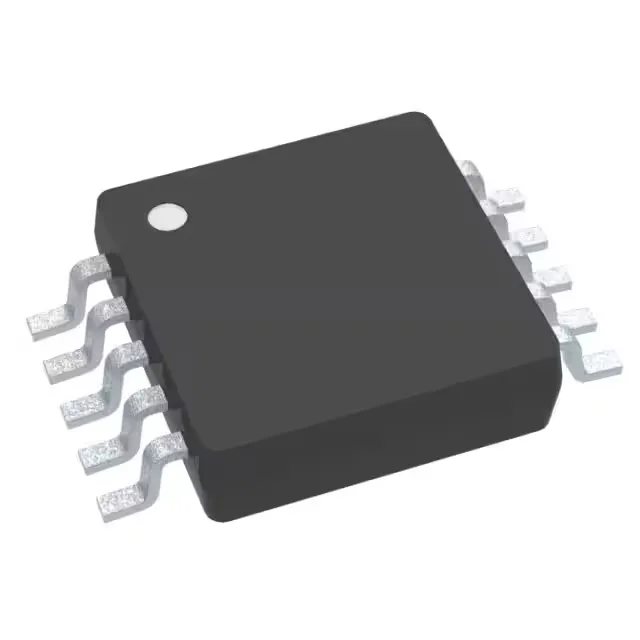
The SN65HVD3080EDGS is supplied in a 10-VSSOP (also known as 10-MSOP) package with a 0.118-inch body width and 3.00 mm width. It is a surface-mount part, so the PCB footprint should match the 10-lead MSOP land pattern (typically 0.5 mm pitch). When laying out the board, keep the decoupling capacitor close to the supply pin; the 5V rail is shared with the bus side, so a 0.1 µF ceramic right at the pin is standard practice.