Full-duplex RS-485 transceiver for 5 V industrial buses
The 50 mV receiver hysteresis gives it clean noise rejection on long cable runs or in electrically noisy factory-floor environments.
What the 50 mV hysteresis and 10 Mbps data rate mean for your bus
The 50 mV hysteresis is built into the receiver — it prevents the output from chattering when the differential bus signal is slow or noisy, which is common on long twisted-pair runs or when the cable shares a tray with VFDs. The 10 Mbps data rate is the upper end for RS-485; if your application only needs 115.2 kbps or 1 Mbps, this part still works, but you are paying for speed margin you may not use. For sub-1 Mbps links, a slower-slew-rate variant (like the SN65HVD1792) could reduce radiated emissions.
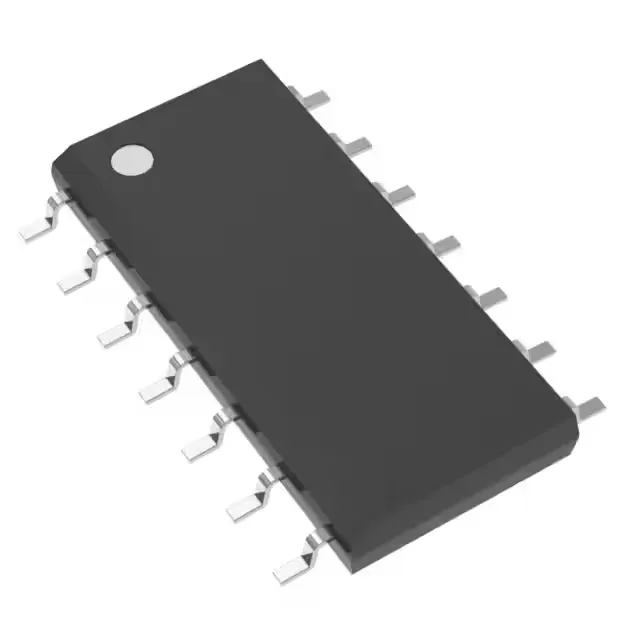
Package and footprint — 14-SOIC
If you already have a layout for a 14-pin SOIC RS-485 part, the SN65HVD1793D drops in without a board spin. The tube shipping medium is fine for prototype and low-volume builds; for reflow assembly, request the tape-and-reel variant (SN65HVD1793DR) to feed the pick-and-place.