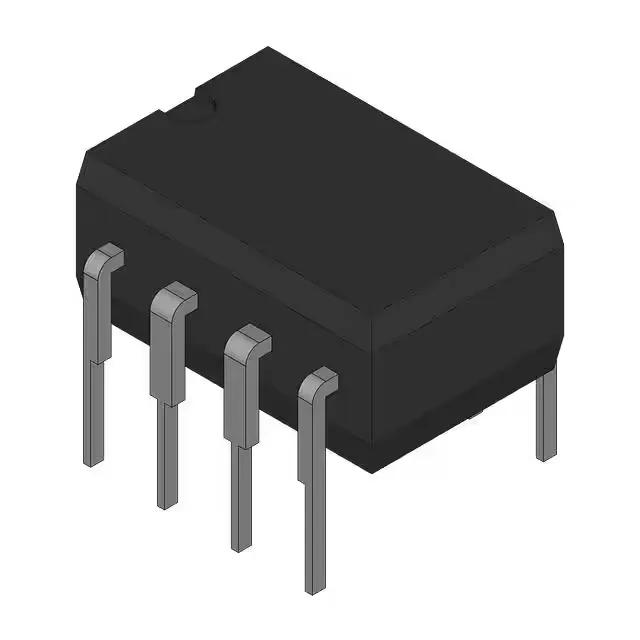
Texas Instruments SN65HVD07P — Interface & Transceivers

SN65HVD07P RS-485/RS-422 Transceiver, 1 Mbps, 8-PDIP

MPNSN65HVD07P
Active

Texas Instruments SN65HVD07P RS-485/RS-422 transceiver, half-duplex, 1 driver/1 receiver, 1 Mbps data rate, 4.5-5.5V supply, -40 to 85°C, 8-PDIP package.

$4.4875Ref. price · indicative, final on quote
Independent supplier — new & surplus stockAuthenticity-screened · ESD-safe packingListing updated Aug 2026

Specifications

SN65HVD07P specifications
ParameterValue
TypeTransceiver
MountingThrough Hole
Supply voltage4.5V ~ 5.5V
ProtocolRS422, RS485
Operating temperature-40°C~85°C
DuplexHalf
PackageTube
Data rate1Mbps
Case8-DIP (0.300\", 7.62mm)
Receiver hysteresis35 mV
Number of drivers (Receivers)1/1

Product details

1 Mbps signaling – bus timing and cable length

The data rate is rated at 1 Mbps. At this speed on an RS-485 bus, practical cable length is roughly 400 m before signal degradation from attenuation and skew becomes a concern. For longer runs, dropping to a lower data rate (e.g., 115.2 kbps) extends reach to 1200 m.

Active lifecycle – no near-term obsolescence risk

The base product number is 65HVD07, and the 'P' suffix denotes the 8-PDIP through-hole package.

Through-hole PDIP – board-level fit

The package is an 8-DIP (0.300", 7.62 mm pitch), through-hole mount. This is a legacy-friendly footprint for socketed or hand-solderable prototypes, and it suits retrofit or repair work where surface-mount rework is impractical. The tube shipping medium is standard for DIP devices.

Frequently asked questions

Is SN65HVD07P obsolete or active?

The SN65HVD07P is listed as active.

What is the data rate of SN65HVD07P?

The maximum data rate is 1 Mbps. For longer cable runs, reducing the data rate extends the usable distance.

What is the difference between SN65HVD07P and SN65HVD07D?

The SN65HVD07P is the through-hole 8-PDIP variant, while the SN65HVD07D is the surface-mount SOIC-8 variant. Electrically they are identical – same 1 Mbps data rate, same supply range, same half-duplex RS-485/RS-422 transceiver. The choice is purely a board-assembly and footprint decision.