High-voltage op-amp for industrial signal chains
The OPA445ADDA is a single-channel general-purpose operational amplifier from Texas Instruments, built for circuits that need to swing signals across a 20 V to 90 V supply span — think piezo drivers, solenoid controls, or precision analog front-ends in factory automation where the rail is 48 V or 72 V.
What the key ratings mean for your BOM
A 2 MHz gain-bandwidth product and 15 V/µs slew rate mean this op-amp handles 100 kHz+ signals at full output swing without slew-rate limiting — the 15 V/µs figure is the rate the output can change, so a 50 Vpp sine at 100 kHz needs about 15.7 V/µs, which is right at the edge; for that amplitude, keep the frequency below 95 kHz or accept some distortion. Input bias current is 10 pA typical and input offset voltage is 1.5 mV — the bias is low enough for high-impedance sensors like photodiodes or pH probes, but the 1.5 mV offset means you should budget a trim or use a higher-grade part if the application needs sub-mV DC accuracy. Output drive is 15 mA per channel — enough to swing a 2.5 V signal into a 166 Ω load, but not for driving a 50 Ω transmission line directly; plan a buffer stage for 50 Ω backplanes. Quiescent supply current is 4.2 mA — reasonable for a high-voltage part; it is not a micropower device, so keep this in the power budget for multi-channel boards.
Package and thermal — the PowerPad matters
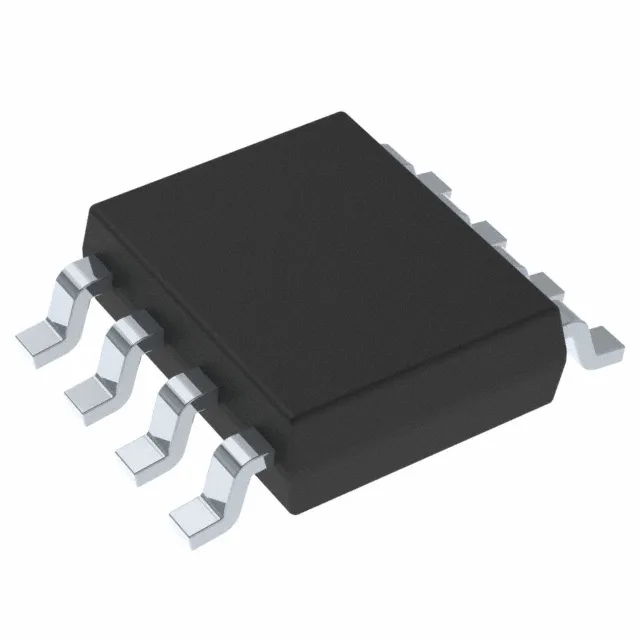
The 8-PowerSOIC package (8-SO PowerPad) has an exposed thermal pad on the bottom — the datasheet's thermal resistance drops significantly when the pad is soldered to a copper plane on the PCB. Without that plane, the part derates faster; with a 1 in² copper pour, the junction-to-ambient resistance is roughly half of the free-air value. Operating temperature range is -25°C to 85°C — this is the industrial band, not extended industrial (-40°C). If the enclosure sees -30°C startup, this part is out of spec; choose the OPA445A or a -40°C rated alternative.