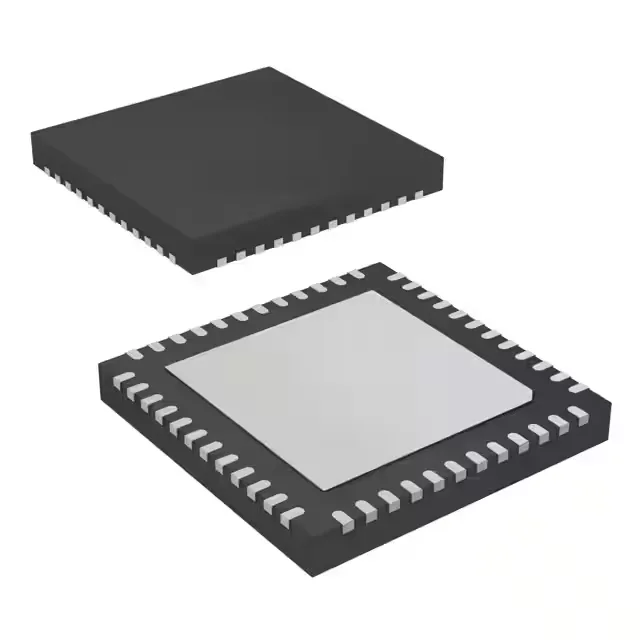
What this 16-bit MCU brings to the board
The Texas Instruments MSP430F5310IRGZT is a 16-bit MSP430 CPUXV2 microcontroller running at 25 MHz, with 32 KB of Flash program memory and 6 KB of SRAM for runtime data. The 48-VFQFN package with exposed pad (7x7 mm) keeps the footprint compact while the thermal pad helps pull heat from the die when driving I/O or running the CPU hard.
At 25 MHz, this MSP430 handles control loops, sensor polling, and communication protocol stacks without breaking a sweat. The 16-bit CPUXV2 core includes a hardware multiplier, so math-heavy tasks like PID loops or digital filtering don't stall the pipeline. If your application needs more headroom, the MSP430F5xx family scales up to higher clock rates — but for most battery-powered or industrial sensor nodes, 25 MHz is the sweet spot between performance and power draw.
Memory sizing: 32 KB Flash, 6 KB RAM
The 6 KB SRAM gives you room for a couple of moderate-sized data buffers and a reasonable call stack. If your firmware needs more space, look at the higher-density MSP430F5xx siblings; if this fits, the 48-pin VQFN package keeps the BOM compact.
Industrial temperature range and on-chip peripherals
Package and soldering notes
For production, a reflow profile matching the datasheet's recommended solder paste stencil is standard. The 31 I/O lines give you enough pins for a keypad, a small LCD, and a few sensor inputs without needing a port expander.