At 8 MHz, this isn't a high-throughput DSP or a motor-FOC engine. It's sized for moderate-rate control loops — reading a handful of analog inputs, updating a segment LCD, and handling serial comms without a bottleneck. The DMA engine offloads data transfers from the CPU, so you can keep the LCD refreshed or buffer UART traffic without eating into the 8 MHz MIPS budget. For a display panel or a data-logging node, that's the right trade-off: enough compute for the task, low enough power to stretch battery life.
Where it fits — display panels, data loggers, battery instruments
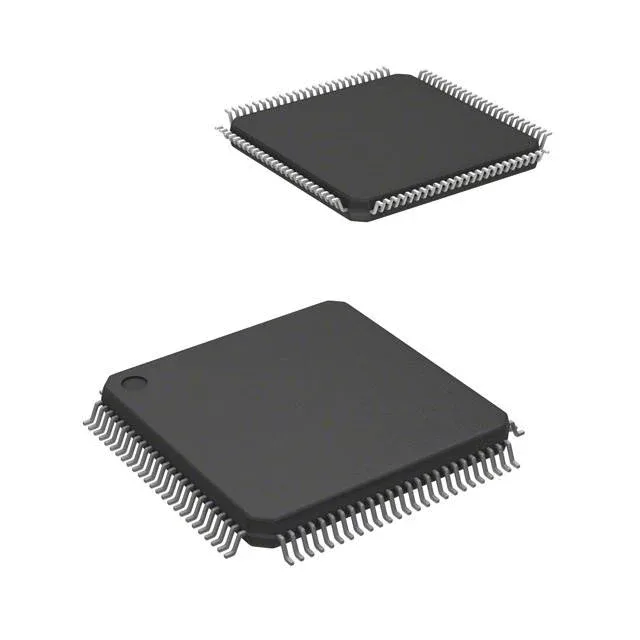
The integrated LCD controller is the standout feature here — it drives a segment LCD directly, saving an external driver IC and the board space it would take. That makes this part a natural fit for handheld meters, flow totalizers, thermostat panels, or any battery-powered instrument that needs a local readout. The 80 I/O lines give you headroom for a keypad matrix, external memory, or a parallel interface to a sensor array. Mount it in the 100-LQFP footprint, route the LCD segment lines to the display connector, and you've got a self-contained UI controller.