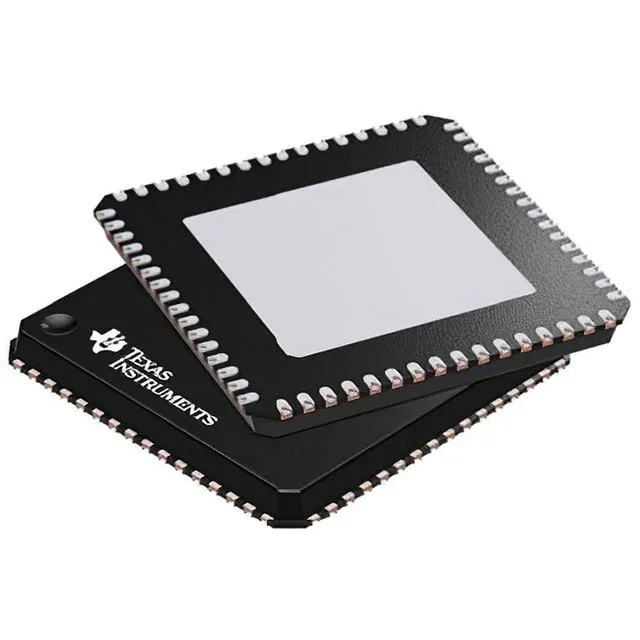
The MSP430F168IRTDR: 16-bit microcontroller with MSP430 CPU16 core, clocked at 8 MHz.
8 MHz core — what the clock speed means for the design
The 8 MHz clock is the maximum CPU frequency for this part. For a 16-bit MSP430 core, that translates to roughly 8 MIPS. This is sufficient for slow-loop sensor acquisition, periodic ADC reads, and serial communication at standard baud rates, but it will not sustain heavy DSP or real-time control loops above a few kilohertz.
48 KB Flash — firmware capacity and field updates
With 48 KB of Flash (48K x 8 plus 256 bytes), this MCU holds a moderate-sized firmware image. The Flash is in-system programmable, so field updates are possible if the bootloader supports it. The 2K x 8 RAM is tight for data buffering — expect to manage stack and global variables carefully, especially when using the ADC or DMA.
Obsolete — sourcing reality and the replacement path
Texas Instruments has marked the MSP430F168IRTDR as obsolete. The manufacturer no longer produces the part, and no last-time-buy window is currently open.
Surface-mount assembly is standard, and the package pitch is fine enough to require careful soldering profiles.