RS-232 link at 250 kbps — what the data rate buys you
The MAX3222IDW is a full-duplex RS-232 transceiver from Texas Instruments that handles 250 kbps on each of its two driver/receiver channels. That data rate covers the vast majority of legacy UART links — 115.2 kbps, 230.4 kbps, and the common 250 kbps industrial baud rates — without needing a faster (and pricier) transceiver. The 2/2 driver/receiver count means you get two independent transmit and two receive paths, enough for a dual serial port or one full-duplex link with hardware flow control (RTS/CTS). Supply range spans 3V to 5.5V, so the same part works in a 3.3V microcontroller design or a legacy 5V backplane. No separate level translator is needed between the UART and the RS-232 bus — the transceiver handles the voltage translation internally.
Receiver hysteresis — noise margin on the bus
The receiver hysteresis is specified at 300 mV. That means the input threshold has 300 mV of built-in deadband between the falling and rising edges, which rejects noise on long RS-232 cable runs. In a noisy industrial environment — motor drives switching nearby, long unshielded cable — that hysteresis keeps the receiver from chattering on coupled transients. It's a spec that matters more for the layout and cable quality than for the baud rate.
Sourcing this part for a production BOM
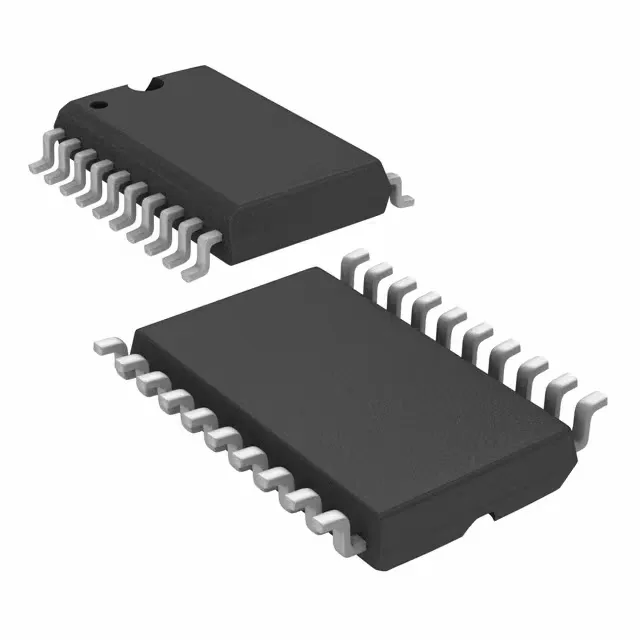
For a production BOM, the key procurement check is the package — 20-SOIC wide (7.50 mm width) — and the temperature grade.