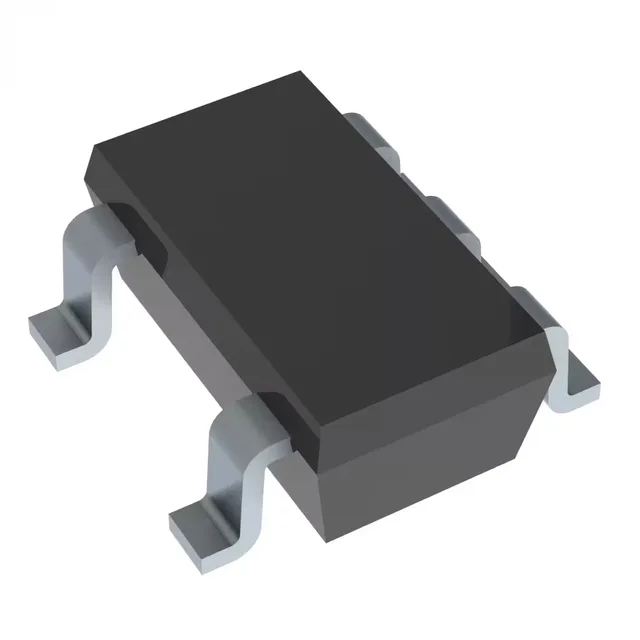
Texas Instruments LP2980AIM5-3.0 — Analog & Data Acquisition

LP2980AIM5-3.0 LDO Regulator, 3.0 V Fixed, 50 mA, NRND

MPNLP2980AIM5-3.0
NRND

National Semiconductor LP2980AIM5-3.0, fixed-output LDO regulator, 3.0 V, 50 mA, PSRR 63 dB at 1 kHz, dropout 0.22 V at 50 mA, SOT-23-5 package, -40°C to 125°C.

$1.3100Ref. price · indicative, final on quote
Independent supplier — new & surplus stockAuthenticity-screened · ESD-safe packingListing updated Jul 2026

Specifications

LP2980AIM5-3.0 specifications
ParameterValue
Output typeFixed
MountingSurface Mount
Voltage - input16V
Voltage dropout0.22V @ 50mA
Voltage - output (Min (Fixed))3V
Output current50mA
Current - supply1.2 mA
Current - quiescent95 µA
Operating temperature-40°C~125°C
PSRR63dB (1kHz)
PackageTape & Reel (TR); Cut Tape (CT)
CaseSC-74A, SOT-753
Control featuresEnable
Protection featuresOver Current, Over Temperature, Short Circuit
Number of regulators1
Output configurationPositive

Product details

3.0 V fixed LDO for noise-sensitive auxiliary rails

The LP2980AIM5-3.0 is a single-output, fixed 3.0 V LDO regulator from National Semiconductor, delivering up to 50 mA in a SOT-23-5 package. It is designed for powering low-current analog or digital rails where a clean, regulated 3.0 V supply is needed — think sensor bias, reference buffers, or MCU I/O supply in mixed-signal designs. Key parametrics include a PSRR of 63 dB at 1 kHz, a maximum dropout of 0.22 V at full load, and a quiescent current of 95 µA. The enable pin allows external on/off control, and built-in protection covers over-current, over-temperature, and short-circuit events.

NRND — plan a last-time buy or second source

Existing production BOMs can still be filled through independent distribution, but new designs should select a current-production LDO with the same 3.0 V fixed output and SOT-23-5 footprint.

The 0.22 V dropout at 50 mA means the input rail must stay above 3.22 V to maintain regulation — a 3.3 V rail with 100 mV ripple still leaves 20 mV headroom. Below that, the output tracks the input minus dropout, and PSRR collapses. For battery-powered designs, the 95 µA quiescent current is the standby floor; the enable pin can pull that to near zero when the load is off. PSRR of 63 dB at 1 kHz attenuates a 100 mVpp ripple on the input to about 70 µVpp on the output — adequate for 10-bit ADC references but marginal for 16-bit precision without additional post-filtering.

Frequently asked questions

Is LP2980AIM5-3.0 obsolete?

Existing BOMs can still be sourced through independent distribution against an RFQ.

What is the replacement for LP2980AIM5-3.0?

For new designs, evaluate a current-production 3.0 V fixed LDO in SOT-23-5 such as the MIC5205-3.0YM5 or MCP1700-3002E/TO — confirm pin compatibility and dropout specs against your load current.

LP2980AIM5-3.0 vs LP2980IM5-3.0 — what is the difference?

The 'A' suffix in LP2980AIM5-3.0 typically indicates an enhanced or improved version — often tighter output tolerance or wider temperature range. The LP2980IM5-3.0 is the standard-grade variant. Both share the same SOT-23-5 footprint and 3.0 V fixed output. Check the respective datasheets for exact tolerance and temp grade differences.

Can I use LP2980AIM5-3.0 in new designs?

Not recommended. The NRND status means the manufacturer advises against new designs. Existing production can continue with sourced inventory, but a current-production LDO should be selected for any new BOM.

What is LP2980AIM5-3.0's PSRR?

PSRR is 63 dB at 1 kHz — a solid mid-range figure that attenuates 100 mVpp input ripple to roughly 70 µVpp on the output.