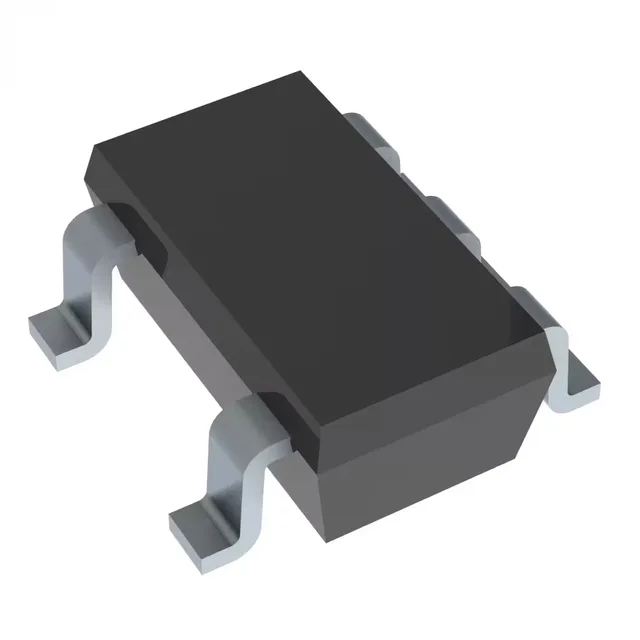
2.9 V fixed LDO for noise-sensitive low-power rails
It targets noise-sensitive analog and low-power digital rails where supply rejection and low quiescent current matter more than raw output capacity. Key parametrics include a PSRR of 63 dB at 1 kHz, a maximum dropout voltage of 0.22 V at full load, and a quiescent current of 95 µA — numbers that put it in the class of a precision LDO for battery-powered or always-on subsystems.
63 dB PSRR — what it means for a clean rail
At 1 kHz the LP2980AIM5-2.9/NOPB delivers 63 dB of power-supply rejection. For a 100 mV ripple on the input, the output sees about 70 µV — enough to keep an analog front-end or a 12-bit ADC reference clean without a post-filter. The 0.22 V maximum dropout at 50 mA means the input can sit as low as 3.12 V and still regulate. In a 3.6 V Li-ion system, that buys usable run time as the cell sags toward end-of-discharge. Quiescent current of 95 µA is a differentiator for always-on blocks — a microcontroller's standby regulator or a CAN transceiver bias rail. The 1.2 mA maximum supply current includes the output drive; at light loads the part stays near its Iq floor.
The SOT-23-5 package (SC-74A, SOT-753) is a standard footprint shared by many 5-pin LDOs, but the 2.9 V fixed output is uncommon. A design migrating away from this part will need to evaluate a programmable or adjustable LDO with a resistor divider to match the output voltage.