3.0 V fixed LDO — the 100 mA rail for industrial and automotive loads
It is built for systems where a clean, regulated 3.0 V rail must be derived from a higher, possibly unregulated input — the 30 V max input rating gives it room to run from a 24 V industrial bus or an automotive battery line without a pre-regulator. The 0.6 V dropout at 100 mA means the input need only sit 0.6 V above the 3.0 V output at full load — useful when the input rail is already close to the output, such as a 3.6 V or 3.8 V supply. Quiescent current is 120 µA typical, keeping the overhead low for always-on or battery-backed domains.
The LP2950CZ-3.0/LFT3 carries an obsolete product status. If the design can tolerate a package change, the LP2950 family includes SOT-23 and SOIC-8 variants with the same 3.0 V fixed output and 100 mA rating — but those are not pin-compatible with the TO-92 footprint. A board respin would be required.
Over-current and over-temperature — built-in, no external parts needed
Internal protection circuits guard against over-current and over-temperature events. The regulator folds back or shuts down before the die exceeds safe limits — no need for a series fuse or a separate thermal sensor on the board. For a 100 mA rail powering a sensor or a low-power MCU, this saves two to three BOM lines.
TO-92 package — the three-lead through-hole footprint
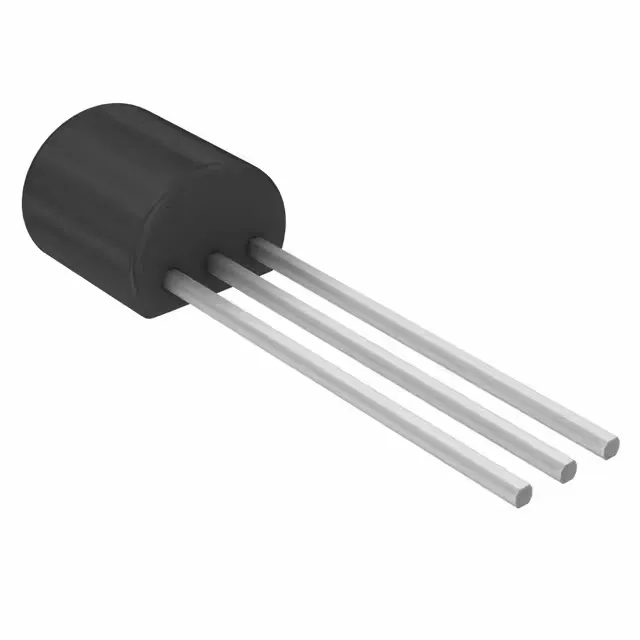
The LP2950CZ-3.0/LFT3 comes in a TO-226-3 / TO-92-3 (TO-226AA) through-hole package, supplier device package TO-92-3. It is a three-lead transistor-style outline — input, ground, output — that hand-solders easily and fits into sockets or perfboard. The Bulk shipping form means it arrives loose in an antistatic bag, not taped and reeled; factor that into pick-and-place planning if the line is automated.