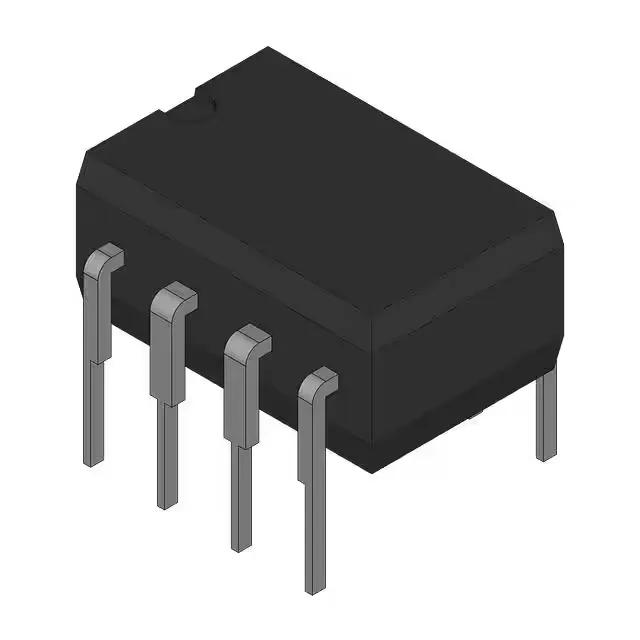
Adjustable LDO for harsh environments
The Texas Instruments LP2950CN is a positive adjustable low-dropout voltage regulator delivering up to 100 mA. The adjustable output is set by an external resistor divider from a 1.24 V reference, giving flexibility to dial in any output between 1.24 V and 29 V.
Dropout and headroom — what the numbers mean
The maximum dropout voltage is 0.6 V at 100 mA load. That means the input rail must stay at least 0.6 V above the programmed output to maintain regulation. For a 5 V output, the input needs at least 5.6 V — and that's at full load. At lighter loads dropout drops lower, but the worst-case number is the one to design around for margin. Input voltage can go up to 30 V, so the LP2950CN can sit on an unregulated 24 V industrial rail or a 12 V battery bus with plenty of headroom for load-dump transients. The 120 µA quiescent current keeps the idle draw low enough for always-on supplies in battery-backed equipment.
Through-hole packaging and protection
The wide pin spacing makes hand-prototyping and field repairs straightforward. On-chip protection includes over-current, over-temperature, and short-circuit shutdown, so the regulator doesn't self-destruct when the output gets a hard fault.
Obsolete — plan the BOM transition
The 8-DIP footprint is common across many adjustable LDOs, but a drop-in replacement is not guaranteed without validating the pinout and compensation.