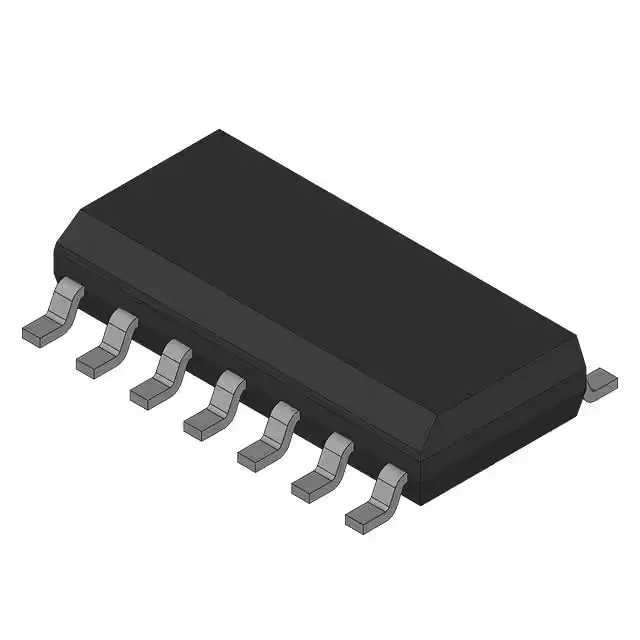
Quad general-purpose op-amp for low-power signal conditioning
Each of the four amplifiers draws 85 µA typical supply current, and the device operates from 3 V to 26 V, covering single-supply and split-rail configurations without an external regulator.
The 3 V minimum supply lets the LP2902MX run directly from a single lithium cell or a 3.3 V rail, while the 26 V maximum covers 24 V industrial buses with margin. At 85 µA per amplifier (340 µA total for all four), the quiescent draw is low enough that a design can leave the op-amp powered continuously in a loop-powered 4-20 mA transmitter or a remote sensor node without draining the battery. The 2 mV input offset voltage and 2 nA input bias current are adequate for general-purpose sensing — thermocouple conditioning, shunt-resistor current monitoring, or level-shifting — but not for microvolt-level precision where a chopper-stabilized amplifier would be called for.
It is listed as RoHS non-compliant, which matters for designs that must meet RoHS exemption limits — verify your compliance requirements before specifying this part.