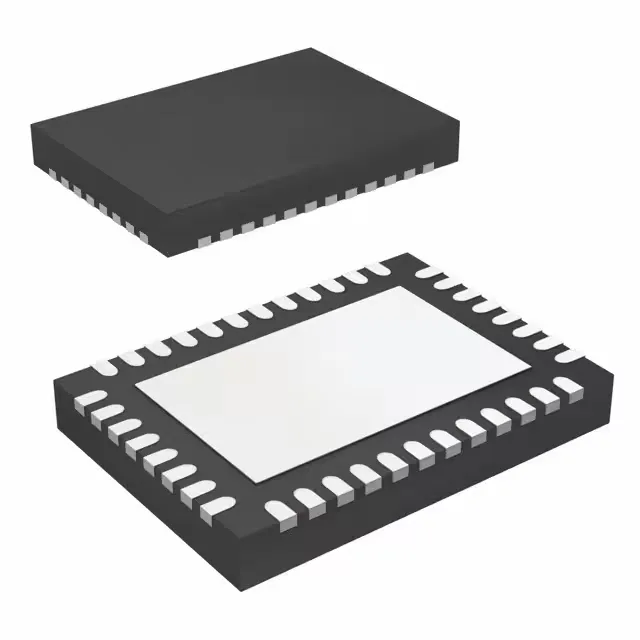
Texas Instruments LMK1D1208PRHAR — Clock & Timing ICs

TI LMK1D1208PRHAR Fanout Buffer, 2 GHz, 40-VQFN

MPNLMK1D1208PRHAR
Active

Texas Instruments LMK1D1208PRHAR Fanout Buffer (Distribution), 2 GHz max, LVDS output, 2:8 input:output ratio, 1.71V-3.465V supply, -40°C~105°C, 40-VFQFN Exposed Pad, ROHS3.

$11.3900Ref. price · indicative, final on quote
Packaging40-VFQFN Exposed Pad
RoHSROHS3 Compliant
Independent supplier — new & surplus stockAuthenticity-screened · ESD-safe packingListing updated Aug 2026

Specifications

LMK1D1208PRHAR specifications
ParameterValue
TypeFanout Buffer (Distribution)
MountingSurface Mount
Supply voltage1.71V ~ 1.89V, 2.375V ~ 2.625V, 3.135V ~ 3.465V
Frequency - max2 GHz
Operating temperature-40°C~105°C(TA)
InputCML, HCSL, LVCMOS, LVDS, LVPECL
OutputLVDS
PackageTape & Reel (TR); Cut Tape (CT)
Case40-VFQFN Exposed Pad
Number of circuits1
Ratio - Input:Output2:8
Differential - Input:OutputYes/Yes

Product details

Clock distribution buffer for high-speed signal trees

The LMK1D1208PRHAR is an 8-channel LVDS fanout buffer from Texas Instruments, designed to distribute a single clock or data signal to eight separate paths with minimal added jitter. It accepts a wide range of differential and single-ended input standards — CML, HCSL, LVCMOS, LVDS, and LVPECL — making it a universal front-end for clock trees that must interface with different logic families on the same board. With a maximum frequency of 2 GHz, this buffer sits comfortably in the signal chain for 10G/25G Ethernet, PCIe Gen 4/5 reference clocks, and high-speed ADC/DAC sampling clocks. The 2:8 input-to-output ratio means two independent clock sources can each fan out to four destinations, or one source can drive all eight outputs — a common configuration for distributing a clean reference across multiple ASICs or FPGAs.

Frequently asked questions

What input signal types does the LMK1D1208PRHAR accept?

The buffer accepts CML, HCSL, LVCMOS, LVDS, and LVPECL input standards. This covers the common differential and single-ended clock formats used in networking, data converter, and FPGA reference clock applications.

What is the maximum frequency the LMK1D1208PRHAR can distribute?

The device supports a maximum frequency of 2 GHz. At this speed, the output rise time and jitter contribution become the limiting factors for signal integrity — the PCB trace impedance and termination must be controlled to within 50 Ω ±10% to keep the eye open.