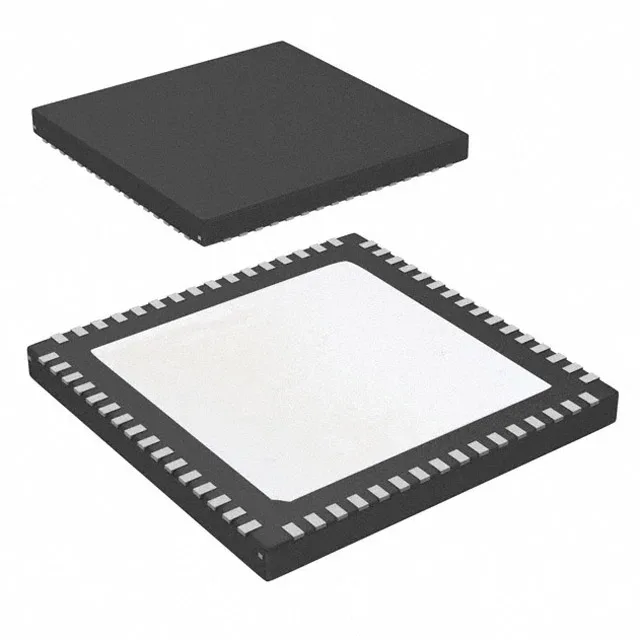
Texas Instruments LMK04832NKDT — Clock & Timing ICs

LMK04832NKDT Jitter Cleaner, PLL, 3.255 GHz, 64-WFQFN

MPNLMK04832NKDT
Active

Texas Instruments LMK04832NKDT jitter cleaner, PLL Yes, Input Clock, Output CML/HSDS/LCPECL/LVCMOS/LVDS/LVPECL, 3.255 GHz max, 3.15V~3.45V supply, 64-WFQFN exposed pad, -40°C~85°C.

$38.1700Ref. price · indicative, final on quote
Sourced new & surplus through independent channelsAuthenticity-screened · ESD-safe packingListing updated Aug 2026

Specifications

LMK04832NKDT specifications
ParameterValue
TypeJitter Cleaner
MountingSurface Mount
Voltage3.15V ~ 3.45V
Frequency3.255GHz
Operating temperature-40°C~85°C(TA)
PLLYes
InputClock
OutputCML, HSDS, LCPECL, LVCMOS, LVDS, LVPECL
PackageTape & Reel (TR); Cut Tape (CT)
Case64-WFQFN Exposed Pad
Divider (Multiplier)Yes/No
Ratio - Input:Output3:14
Differential - Input:OutputYes/Yes

Product details

PLL jitter cleaner for high-speed clock trees

The Texas Instruments LMK04832NKDT is a PLL-based jitter cleaner that accepts a clock input and delivers up to 14 differential or single-ended outputs across six signal formats — CML, HSDS, LCPECL, LVCMOS, LVDS, and LVPECL — at a maximum output frequency of 3.255 GHz. It is designed to clean the phase noise on a reference clock before distributing it to ADCs, DACs, FPGAs, or SERDES transceivers in applications such as wireless infrastructure, radar, instrumentation, and high-speed data acquisition.

Output flexibility and supply tolerance

With a 3:14 input-to-output ratio, the device can fan out a single clean reference to multiple loads while maintaining sub-100 fs RMS jitter typical at the outputs. All signal paths are differential on both input and output sides, which means the layout must treat each pair as a controlled-impedance 100-ohm differential trace with matched length.

Frequently asked questions

What output formats does the LMK04832NKDT support?

It outputs CML, HSDS, LCPECL, LVCMOS, LVDS, and LVPECL — covering nearly all high-speed logic families without external level translation.