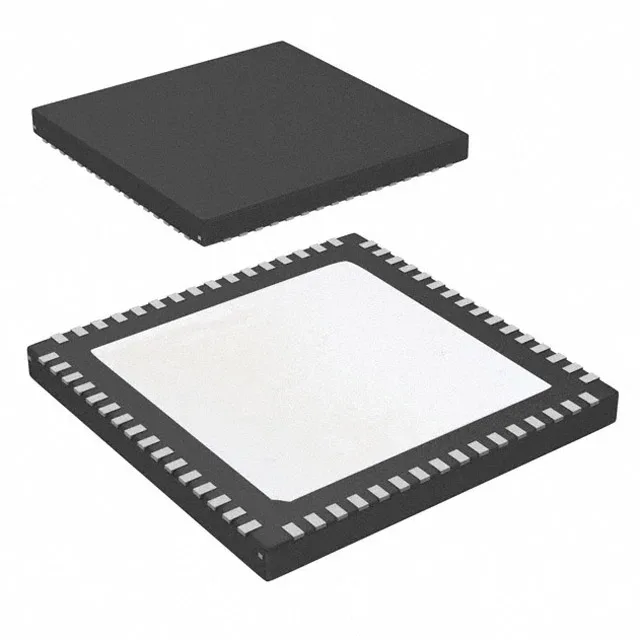
Texas Instruments LMK04805BISQ/NOPB — Clock & Timing ICs

Texas Instruments LMK04805BISQ/NOPB Jitter Cleaner

MPNLMK04805BISQ/NOPB
Active

Texas Instruments PLLatinum™ Jitter Cleaner, LMK04805BISQ/NOPB, PLL Yes, 1.536 GHz max, 2:14 Input:Output, LVCMOS/LVDS/LVPECL, 64-WFQFN Exposed Pad, Tape & Reel.

$15.1590Ref. price · indicative, final on quote
Independent supplier — new & surplus stockAuthenticity-screened · ESD-safe packingListing updated Aug 2026

Specifications

LMK04805BISQ/NOPB specifications
ParameterValue
TypeJitter Cleaner
SeriesPLLatinum™
MountingSurface Mount
Supply voltage3.15V ~ 3.45V
Frequency - max1.536GHz
Operating temperature-40°C~85°C
PLLYes
InputLVCMOS, LVDS, LVPECL
OutputLVCMOS, LVDS, LVPECL
PackageTape & Reel (TR)
Case64-WFQFN Exposed Pad
Divider (Multiplier)Yes/No
Number of circuits1
Ratio - Input:Output2:14
Differential - Input:OutputYes/Yes

Product details

Jitter cleaning for high-speed converter clocks

The LMK04805BISQ/NOPB is a PLLatinum jitter cleaner from Texas Instruments, designed to reduce phase noise on a reference clock before distribution to ADCs, DACs, or FPGA transceivers. Its 1.536 GHz maximum output frequency covers the sampling clock range for most high-speed converters and SERDES interfaces. With a 2:14 input-to-output ratio, the device accepts two reference inputs and generates up to fourteen cleaned clock outputs. All I/O pins support LVCMOS, LVDS, and LVPECL levels, so the same IC can drive a mixed-signal board's entire clock tree without external level translators.

Supply rails and temperature grade

The part operates from a 3.15 V to 3.45 V supply rail, a narrow window that demands a clean, regulated source — a 3.3 V LDO with ±1% tolerance keeps the PLL's VCO in spec. The 0.5 mm pitch demands careful solder-paste stencil design for void-free reflow.

Frequently asked questions

What is the input-to-output ratio on this jitter cleaner?

The LMK04805BISQ/NOPB provides a 2:14 ratio — two reference inputs and fourteen clock outputs. All outputs are differential-capable, supporting LVDS or LVPECL pairs, or single-ended LVCMOS.