What the 2 GHz ceiling and 4:16 ratio mean for the clock tree
The LMK04616ZCRR is a jitter cleaner with an integrated PLL, rated for differential inputs up to 2 GHz. That frequency ceiling covers the highest-speed serial links — 10G/25G Ethernet reference clocks, JESD204B SYSREF, and RF sampling converters — without needing a divider on the front end. The 4:16 input-to-output ratio means four independent input paths feed sixteen outputs. For a system with multiple clock domains — FPGA core, transceiver, ADC, DAC — one device cleans and fans out all the references, eliminating separate PLLs per rail.
Signal format flexibility and the BGA footprint
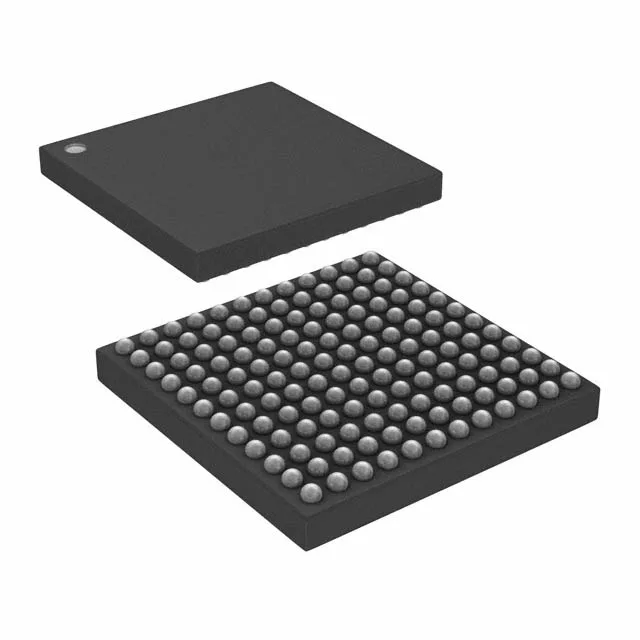
Inputs accept HCSL, HSDS, LCPECL, LVCMOS, LVDS, and LVPECL; outputs deliver HCSL, HSDS, LVDS, and LVPECL. That covers the common differential signalling standards in base station, test equipment, and data converter designs — no external level translation between the oscillator and the downstream loads. The 144-NFBGA (10x10 mm) package has a 0.8 mm ball pitch — standard for a BGA this size.