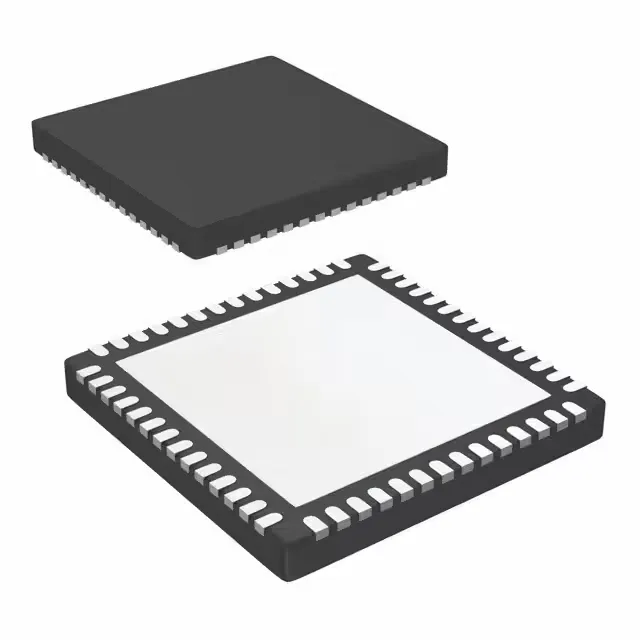
Texas Instruments LMK04610RTQT — Clock & Timing ICs

LMK04610RTQT — TI Jitter Cleaner PLL, 6.175 GHz, 56-QFN

MPNLMK04610RTQT
Active

Texas Instruments LMK04610RTQT, Jitter Cleaner PLL, 1 circuit, 2:10 input-to-output ratio, differential I/O, 1.7 V–3.465 V supply, 56-VFQFN exposed pad, -40°C to 85°C.

$35.6900Ref. price · indicative, final on quote
Packaging56-VFQFN Exposed Pad
RoHSROHS3 Compliant
Independent supplier — new & surplus stockAuthenticity-screened · ESD-safe packingListing updated Aug 2026

Specifications

LMK04610RTQT specifications
ParameterValue
TypeJitter Cleaner
MountingSurface Mount
Supply voltage1.7V ~ 3.465V
Frequency - max6.175GHz
Operating temperature-40°C~85°C
PLLYes
InputCML, LVCMOS, LVDS, LVPECL
OutputHCSL, LVDS, LVPECL
PackageTape & Reel (TR); Cut Tape (CT)
Case56-VFQFN Exposed Pad
Divider (Multiplier)Yes/No
Number of circuits1
Ratio - Input:Output2:10
Differential - Input:OutputYes/Yes

Product details

What the 6.175 GHz ceiling means for your clock tree

The LMK04610RTQT: This jitter cleaner accepts CML, LVCMOS, LVDS, and LVPECL inputs and outputs HCSL, LVDS, or LVPECL — covering most serializer/deserializer reference clocks, ADC/DAC sample clocks, and FPGA transceiver clocks without external level translation. The 6.175 GHz max frequency sets the upper bound for the cleaned output. Below that, the PLL attenuates phase noise on the reference, which is the whole point of a jitter cleaner over a generic PLL.

Supply range and package — board-level constraints

The 1.7 V to 3.465 V supply spans 1.8 V and 3.3 V rails used in most high-speed digital systems.

Frequently asked questions

What output types does LMK04610RTQT support?

HCSL, LVDS, and LVPECL. The input side accepts CML, LVCMOS, LVDS, and LVPECL, so the part can bridge between different logic families in the clock path.

Is LMK04610RTQT a direct replacement for LMK04610?

The base product number is LMK04610, and the RTQT suffix denotes the 56-QFN package and tape-and-reel packaging. Functionally it is the same die; the suffix is a packaging and reel identifier, not a revision change.