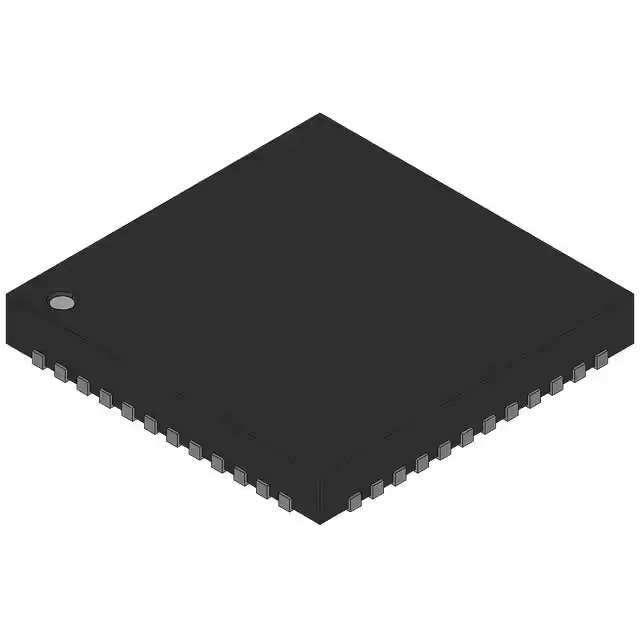
Texas Instruments LMK03000DISQ/NOPB — Clock & Timing ICs

Texas Instruments LMK03000DISQ/NOPB Clock Conditioner

MPNLMK03000DISQ/NOPB
Active

Texas Instruments LMK03000DISQ/NOPB Clock Conditioner, 1:8 fanout, 1.296 GHz max, LVCMOS/LVDS/LVPECL input, LVDS/LVPECL output, 48-WFQFN exposed pad, -40 to 85°C.

$11.2935Ref. price · indicative, final on quote
Packaging48-WFQFN Exposed Pad
Independent supplier — new & surplus stockAuthenticity-screened · ESD-safe packingListing updated Aug 2026

Specifications

LMK03000DISQ/NOPB specifications
ParameterValue
TypeClock Conditioner
MountingSurface Mount
Supply voltage3.15V ~ 3.45V
Frequency - max1.296GHz
Operating temperature-40°C~85°C
PLLNo
InputLVCMOS, LVDS, LVPECL
OutputLVDS, LVPECL
PackageTape & Reel (TR)
Case48-WFQFN Exposed Pad
Divider (Multiplier)Yes/No
Number of circuits1
Ratio - Input:Output1:8
Differential - Input:OutputYes/Yes

Product details

The LMK03000DISQ/NOPB is a clock conditioner from Texas Instruments, providing a 1:8 fanout from a single differential or single-ended input. It accepts LVCMOS, LVDS, or LVPECL levels and delivers LVDS or LVPECL outputs, with a maximum frequency of 1.296 GHz. It does not include an internal PLL — the signal path is a clean fanout buffer/conditioner, not a synthesizer.

Housed in a 48-WFQFN with an exposed pad (supplier package 48-WQFN, 7x7 mm), the part requires a thermal land on the PCB to draw heat from the die pad. Surface-mount, tape-and-reel packaging (TR) — the reel quantity is the standard TI reel count for this package size. No MSL rating is listed in the spec record, but WFQFN packages typically ship at MSL 3; confirm the label before the bake decision.

Frequently asked questions

What is the maximum frequency the LMK03000DISQ/NOPB can handle?

The device supports a maximum frequency of 1.296 GHz on the output side, with differential inputs and outputs rated for LVDS or LVPECL signaling at that speed.

What is the fanout ratio of this clock conditioner?

The LMK03000DISQ/NOPB provides a 1:8 fanout — one input drives eight differential outputs, making it suitable for distributing a single reference clock to multiple loads.