What the 460V/µs slew rate buys you in a signal chain
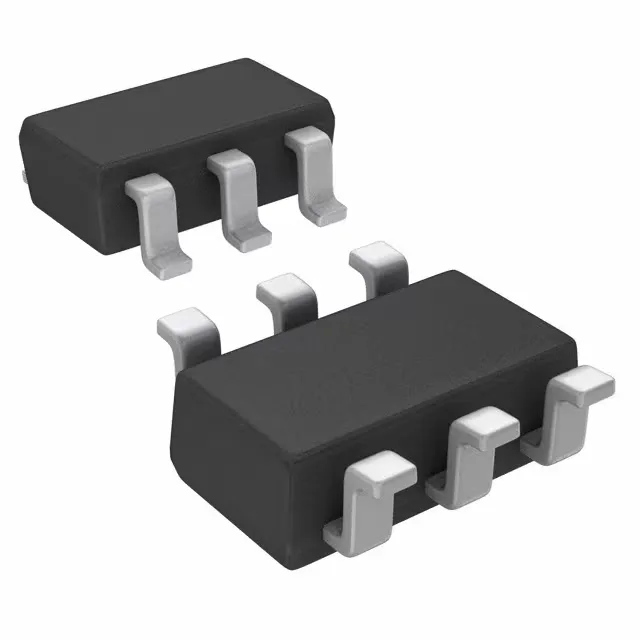
The LMH6611MKE/NOPB is a single-channel general-purpose op amp from Texas Instruments in a TSOT-23-6 package. Its 460V/µs slew rate means the output can swing 4.6 V in 10 ns — fast enough to reproduce a 10 MHz square wave with 5 Vpp amplitude without significant slew-induced distortion. This matters when the signal chain drives a video line, a high-speed ADC input, or a pulse that must keep its edge sharp through a cable. The -3dB bandwidth of 365 MHz and gain-bandwidth product of 135 MHz together define the usable small-signal gain range: at a noise gain of 10, the closed-loop bandwidth drops to roughly 36.5 MHz, still enough for most IF or video processing stages.
Supply rails and output drive — where the part fits on the board
The supply span runs from 2.7 V to 11 V, so the same part works off a 3.3 V or 5 V rail without a separate regulator. Rail-to-rail output means the swing reaches within 50 mV of each rail at light load — useful when the ADC reference is the supply itself. Output current is rated 120 mA per channel, enough to drive a 50-ohm back-terminated cable or a 16-bit SAR ADC input stage directly. The 3.3 mA quiescent supply current keeps the thermal budget low in a dense board.
Temperature grade and package reality
Rated for -40°C to 125°C operating temperature, this op amp covers the industrial and automotive cabin temperature range without derating. The TSOT-23-6 package (Supplier Device Package TSOT-23-6) is a thin SOT-23 with 0.95 mm pitch — standard for hand-assembly and reflow, but the exposed pad is not present, so thermal dissipation relies on the copper plane under the package. Surface-mount only; offered in Tape & Reel (TR) or Cut Tape (CT) options. The TR quantity is typically 3000 pieces per reel for this package family.
Lifecycle and sourcing posture
For volume or scheduled orders, pricing and lead time are confirmed at RFQ. The part is not on allocation as of the latest market read — lead times track the standard TI op-amp portfolio cycle.