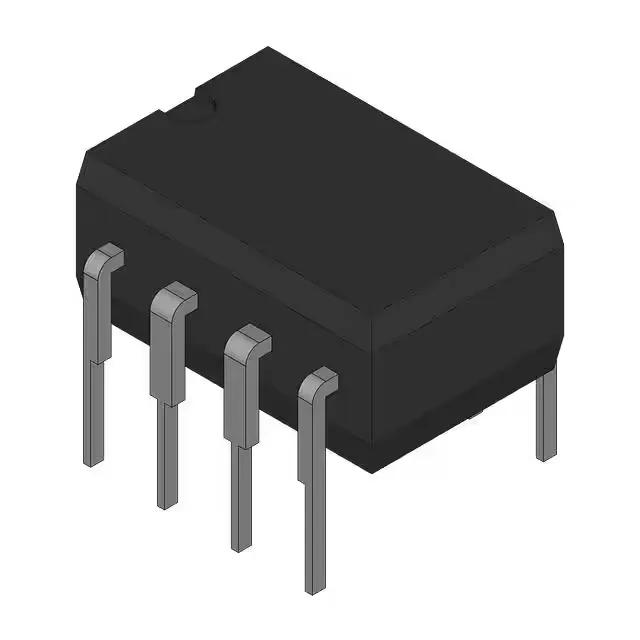
Its headline feature is an input bias current of 0.01 pA — orders of magnitude lower than a typical JFET or bipolar op-amp — which makes it the go-to choice for photodiode transimpedance amplifiers, pH probe buffers, and any circuit where the source impedance is in the tens of megohms or higher. The rail-to-rail output stage lets it swing close to the supply rails, useful in single-supply designs running from 4.5 V to 15.5 V.
At 0.01 pA, the input bias current is so low that leakage across the PCB can dominate the error budget. The 1 mV input offset voltage is typical for a CMOS stage.