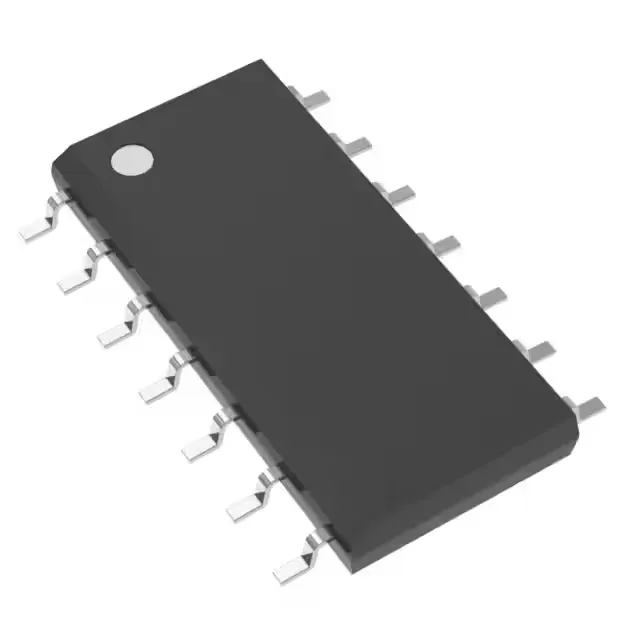
Texas Instruments LM837MX/NOPB — Memory (DRAM / SRAM / Flash / EEPROM)

Texas Instruments LM837MX/NOPB Quad Op-Amp, 25 MHz, 14-SOIC

MPNLM837MX/NOPB
End of Life

Texas Instruments LM837MX/NOPB quad general-purpose op-amp, 25 MHz gain bandwidth, 10 V/µs slew rate, 36 V supply span, 14-SOIC surface mount, tape and reel.

$1.69Ref. price · indicative, final on quote
Packaging14-SOIC (0.154", 3.90mm Width)
RoHSROHS3 Compliant
Sourced new & surplus through independent channelsAuthenticity-screened · ESD-safe packingListing updated Aug 2026

Specifications

LM837MX/NOPB specifications
ParameterValue
MountingSurface Mount
Amplifier typeGeneral Purpose
Voltage - input offset300 µV
Voltage - supply span36 V
Current - supply10mA (x4 Channels)
Current - input bias500 nA
Current - output (Channel)40 mA
Operating temperature-40°C ~ 85°C
Gain bandwidth product25 MHz
PackageTape & Reel (TR); Cut Tape (CT)
Slew rate10V/µs
Case14-SOIC (0.154\", 3.90mm Width)
Number of circuits4

Product details

25 MHz gain bandwidth, 10 V/µs slew — signal chain ceiling

The LM837MX/NOPB is a quad general-purpose op-amp with a 25 MHz gain-bandwidth product and 10 V/µs slew rate — the GBW sets the small-signal bandwidth ceiling for a given closed-loop gain, while the slew rate governs large-signal distortion. At a gain of 10, the -3 dB bandwidth is roughly 2.5 MHz, enough for audio processing, motor-current sensing, or control-loop filtering. The 10 V/µs slew rate means a 10 V output step slews in 1 µs, keeping total harmonic distortion low in the audio band.

Quad channel, 2.5 mA per amplifier — power budget for dense boards

Four amplifiers in a single 14-SOIC package drawing 10 mA total — that is 2.5 mA per channel at the typical supply current. On a multi-channel data-acquisition board with eight op-amps, two LM837MX/NOPB devices consume 20 mA from the rail, leaving headroom for the ADC and reference. The 36 V supply span supports split ±18 V rails or a single 36 V rail, common in industrial analog front-ends where the signal swing needs to cover ±10 V. The 500 nA input bias current is typical for a bipolar-input design; plan for a few hundred microvolts of offset drift if the source impedance exceeds 10 kΩ.

Industrial temperature, standard SOIC footprint

Surface-mount assembly on a 1.6 mm FR-4 board with standard reflow profile works; no special bake-out required for moisture sensitivity as the package is typical MSL 1 or 2 for SOIC (not explicitly stated, but standard). The tape-and-reel packaging is suited for automated pick-and-place in volume production.

Frequently asked questions

What is the closest functional second-source for LM837MX/NOPB?

The TLV9362IDDFR is a newer-generation dual op-amp from the same manufacturer with a 10.6 MHz GBW and 25 V/µs slew rate, but it is a dual-channel part in a different package (SOT-23-8). It is not a pin-compatible drop-in replacement for the quad-channel LM837MX/NOPB in SOIC-14 — a board layout change is required.

What is LM837MX/NOPB's slew rate?

The slew rate is 10 V/µs. At a gain of 1, this supports a full-power bandwidth of approximately 160 kHz for a 20 V peak-to-peak output swing.