95 mW per channel into 16 Ω — the drive budget for portable audio
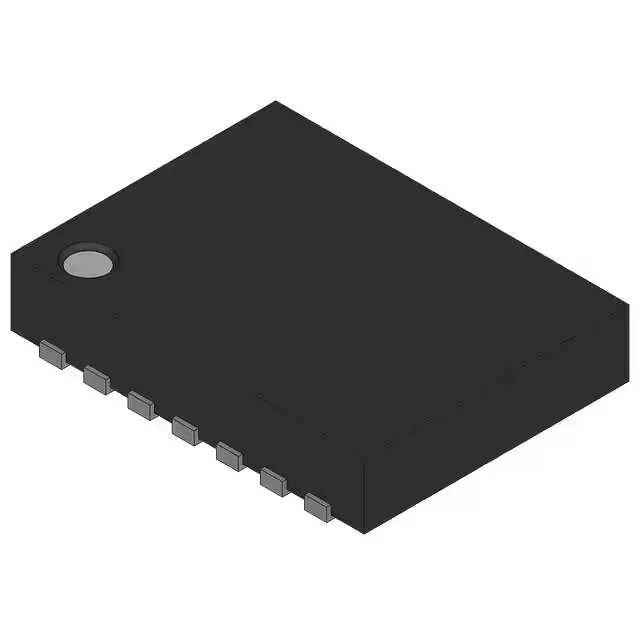
The LM4917SD/NOPB delivers 95 mW per channel into a 16 Ω load — enough to drive consumer-grade headphones to comfortable listening levels from a 1.4 V to 3.6 V supply rail, typical of a single Li-ion cell or two alkaline cells in series. As a Class AB output stage, it avoids the crossover distortion of Class B while keeping quiescent current lower than a pure Class A design — the right trade-off for battery-powered portable audio where THD matters at low signal levels. The 14-WSON package (4 mm x 3 mm) with exposed pad pulls heat into the PCB copper plane, so the thermal budget for continuous playback depends on the board's copper area under the pad.
Supply range and shutdown — designed for single-cell battery rails
Operating from 1.4 V to 3.6 V, the amplifier starts working before a Li-ion cell hits its undervoltage lockout and survives the full charge voltage — no external regulator needed if the battery is the only supply. The shutdown feature (pin-controlled) drops the quiescent current to near-zero for power gating between audio bursts — critical in a wearable or IoT device where the amplifier spends most of its time idle. Depop circuitry suppresses the turn-on/turn-off thump that would otherwise couple into the headphones — a real concern in portable designs where the amplifier cycles on and off with the audio stream.
Industrial temperature grade and protection — not just a consumer part
Rated for -40°C to +85°C ambient, the amplifier holds its bias and output swing across the industrial temperature range — a dash-mounted audio player or outdoor handheld terminal stays within spec on a hot summer dashboard or a cold warehouse floor. Integrated short-circuit and thermal protection means the output stage folds back before the die reaches destructive temperature — the part survives a headphone jack short without latching up or requiring a reset.