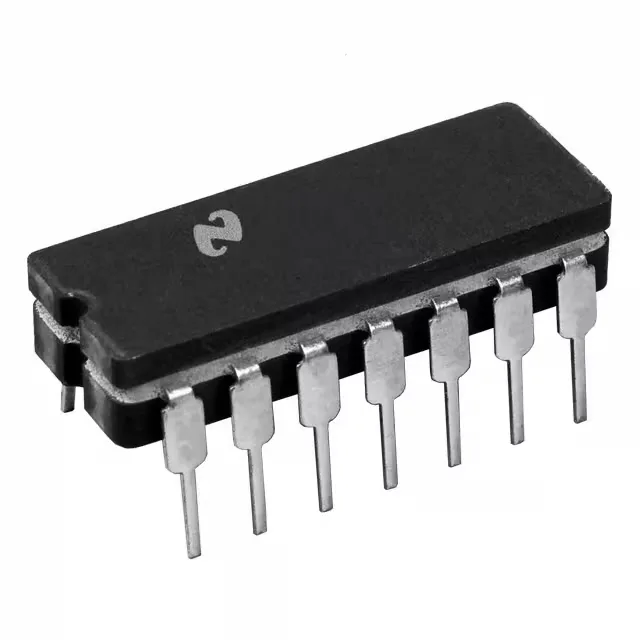
Texas Instruments LM124AJ/PB — Memory (DRAM / SRAM / Flash / EEPROM)

LM124AJ/PB Op Amp, 1 MHz, Quad, 14-CDIP, -55 to 125°C

MPNLM124AJ/PB
End of Life

Texas Instruments LinCMOS™ series, LM124AJ/PB, IC OPAMP GP 4 CIRCUIT 14CDIP. General Purpose amplifier, 1 MHz gain bandwidth, 3 V to 32 V supply, 1.5 mA supply current, -55 to 125 °C operating temperature, 14-CDIP through-hole package.

$19.29Ref. price · indicative, final on quote
Packaging14-CDIP (0.300", 7.62mm)
StockContact for availability
MOQ1 pcs
  • 100% new & originalTraceable channels only — no refurbs, no pulls, no remarked parts.
  • Date & lot codes on quoteStated per line before you commit; label photos on request.
  • MSL-compliant ESD packingMoisture-sealed bags with indicator cards; reels photo-verified.
  • PayPal buyer protectionPay by T/T, PayPal or Payoneer — card payments covered end to end.

Specifications

LM124AJ/PB Technical Specifications
ParameterValue
SeriesLinCMOS™
Mounting typeThrough Hole
Amplifier typeGeneral Purpose
Voltage - input offset2 mV
Voltage - supply span32 V
Current - supply1.5mA
Current - input bias45 nA
Current - output (Channel)40 mA
Operating temperature-55°C ~ 125°C (TJ)
Gain bandwidth product1 MHz
PackageTube
Case14-CDIP (0.300\", 7.62mm)
Number of circuits4

Product details

Quad op-amp in a hermetic CDIP — what you're getting

The Texas Instruments LM124AJ/PB is a quad general-purpose operational amplifier from the LinCMOS™ series, packaged in a 14-CDIP (0.300", 7.62 mm) ceramic dual-in-line with through-hole mounting. Four independent amplifiers in one package, each with a 1 MHz gain-bandwidth product and 40 mA output current capability. Supply range spans 3 V to 32 V, drawing 1.5 mA total quiescent current. Input offset voltage is 2 mV typical, input bias current 45 nA. The -55 °C to 125 °C junction temperature range puts this squarely in the military / high-reliability tier — avionics, satellite, downhole instrumentation, or any sealed-environment board where a plastic SOIC won't cut it. The ceramic DIP handles thermal cycling and moisture resistance that plastic packages can't match.

Supply voltage range — why it simplifies the BOM

Supply span is 3 V to 32 V.

14-CDIP package — rework and handling notes

The 14-CDIP (0.300" body width, 7.62 mm row spacing) is a through-hole ceramic package.

Active lifecycle — no LTB risk for new designs

Product status is Active per the manufacturer. No last-time-buy notice, no end-of-life flag. This part can be specified into new production builds with confidence. ROHS3 compliant — no lead-free conversion concern for legacy Pb-free assembly lines.

Frequently asked questions

Is LM124AJ/PB a direct replacement for LM124N?

The LM124AJ/PB and LM124N are both quad general-purpose op-amps from TI with the same 1 MHz GBP, 3-32 V supply, and -55 to 125 °C range. The key difference is the package: LM124AJ/PB is a 14-CDIP (ceramic DIP), while LM124N is typically a plastic PDIP. They are pin-compatible in function and pinout, but the ceramic package is specified for hermetic / high-reliability environments. If your board originally used a plastic DIP and the environment doesn't require hermetic sealing, the LM124N is the direct drop-in. If the board was designed for a ceramic DIP socket, the LM124AJ/PB is the correct fi

Is LM124AJ/PB obsolete or EOL?

No. The product status is Active per the manufacturer. There is no end-of-life notice or last-time-buy schedule in effect.

Does LM124AJ/PB have a RoHS or lead-free variant?

Yes, the LM124AJ/PB is ROHS3 Compliant. No separate lead-free variant is needed — this part already meets the ROHS3 directive.

When sourcing LM124AJ/PB, what's the closest functional second-source?

The INA4290A2IRGVR is a quad current-sense amplifier with a 1.1 MHz bandwidth and 2 V/µs slew rate, but it is a current-sense type, not a general-purpose op-amp, and it runs on a 2.7 V supply in a surface-mount package. It is not a pin-compatible or functional replacement for the LM124AJ/PB. For a general-purpose quad op-amp in a similar performance class, the TLV9352IDDFR (dual, 10.6 MHz) or TLV9351IDCKR (single, 3.5 MHz) are newer CMOS alternatives but in surface-mount packages and with fewer channels per package. No exact second-source exists in a 14-CDIP package with the same quad configur