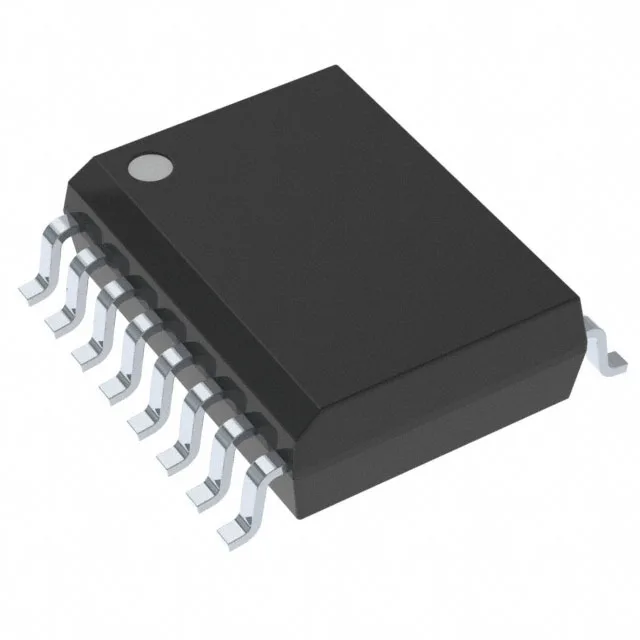
Precision instrumentation amplifier in 16-SOIC
The INA115BU is a single-channel instrumentation amplifier from Texas Instruments, designed for precision signal conditioning where low offset and low drift are critical. It delivers a 10 µV maximum input offset voltage and 500 pA input bias current, making it suitable for bridge sensors, thermocouple amplifiers, and medical instrumentation front-ends that must resolve microvolt-level signals without calibration. The 1 MHz -3 dB bandwidth and 0.6 V/µs slew rate define the usable signal frequency — the part handles DC-coupled signals up to roughly 100 kHz at full output swing before slew-rate limiting sets in.
Supply range and single-supply operation
Operating from a single supply as low as 4.5 V up to a dual supply of ±18 V (36 V total span), the INA115BU fits into both battery-powered 5 V systems and industrial ±15 V rails without a separate regulator. Quiescent current is 2.2 mA typical — low enough for multi-channel data-acquisition boards where each amplifier's supply draw adds up across 8 or 16 channels. Output can source or sink 20 mA, sufficient to drive the input of a successive-approximation ADC directly or a twisted-pair cable run up to a few metres.
Package, temperature grade, and compliance
Housed in a 16-pin SOIC wide-body (7.50 mm width), the INA115BU uses a standard footprint shared with many precision amplifiers — board layout reuse is straightforward if migrating from a similar SOIC-16 part. Rated for -40°C to +85°C industrial temperature range, it covers factory-floor enclosures, test equipment, and outdoor telecom shelters without derating. Sourced to order; availability and current pricing confirmed at RFQ.