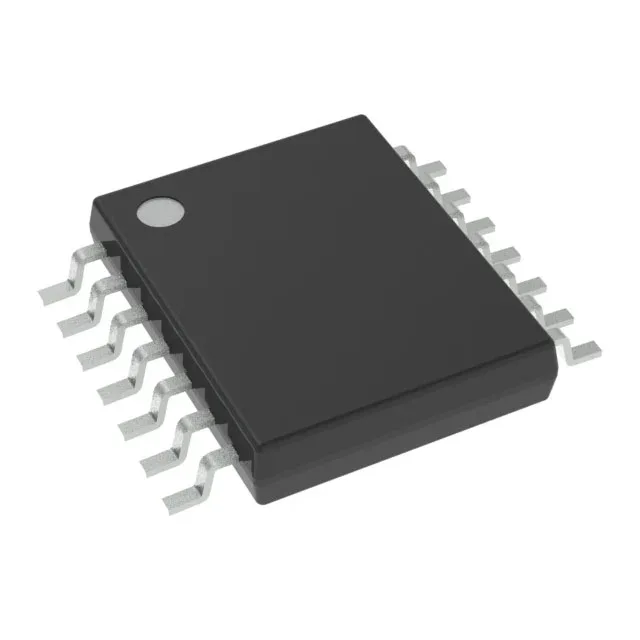
Texas Instruments CDCEL913IPWRQ1 — Clock & Timing ICs

TI CDCEL913IPWRQ1 PLL Clock Synthesizer, AEC-Q100, 230 MHz

MPNCDCEL913IPWRQ1
Active

Texas Instruments CDCEL913IPWRQ1, PLL Clock Synthesizer, AEC-Q100, 230 MHz max, 1.7V–1.9V supply, LVCMOS/Crystal input, LVCMOS output, 1:3 ratio, 14-TSSOP, -40°C~85°C.

$2.5770Ref. price · indicative, final on quote
Sourced new & surplus through independent channelsAuthenticity-screened · ESD-safe packingListing updated Aug 2026

Specifications

CDCEL913IPWRQ1 specifications
ParameterValue
TypePLL Clock Synthesizer
SeriesAutomotive, AEC-Q100
MountingSurface Mount
Voltage1.7V ~ 1.9V
Frequency230MHz
Operating temperature-40°C~85°C
PLLYes with Bypass
InputLVCMOS, Crystal
OutputLVCMOS
PackageTape & Reel (TR); Cut Tape (CT)
Case14-TSSOP (0.173\", 4.40mm Width)
Divider (Multiplier)Yes/Yes
Number of circuits1
Ratio - Input:Output1:3
Differential - Input:OutputNo/No

Product details

AEC-Q100 PLL clock synthesizer for automotive timing trees

The CDCEL913IPWRQ1: It accepts either an LVCMOS reference or a crystal input and delivers three LVCMOS clock outputs from a single PLL core, with a maximum output frequency of 230 MHz. The PLL includes a bypass mode that passes the input reference directly to the outputs — useful for test modes or when the system needs a clean, unmultiplied clock during bring-up.

The 1.7V–1.9V supply range ties this part to low-voltage core domains. At 230 MHz max output, the CDCEL913IPWRQ1 covers common automotive clock frequencies. The 1:3 input-to-output ratio means a single reference can feed three clock domains without an external fan-out buffer.

Package and footprint — layout considerations

Surface-mount only — the Tape & Reel option (TR) is the standard production reel; Cut Tape (CT) is available for prototyping or small-batch builds.

Frequently asked questions

Is CDCEL913IPWRQ1 automotive grade?

Yes, it is qualified to AEC-Q100, the automotive stress-test qualification for integrated circuits. That covers the temperature range, ESD, and reliability requirements for automotive body and chassis applications.

Can CDCEL913IPWRQ1 replace CDCEL913IPWR?

The base part number is the same (CDCEL913), and the package, pinout, and electrical specs are identical. The only difference is the suffix — the Q1 version adds AEC-Q100 automotive qualification. In a non-automotive design the non-Q1 variant is functionally interchangeable, but for a BOM that already specifies the Q1 grade, the standard-grade part does not meet the qualification requirement.

What is the output frequency range of CDCEL913IPWRQ1?

The maximum output frequency is 230 MHz. The lower end is set by the PLL divider range and the input reference frequency — typically down to a few kilohertz, but the datasheet's guaranteed range starts from the minimum input frequency divided by the maximum divider.