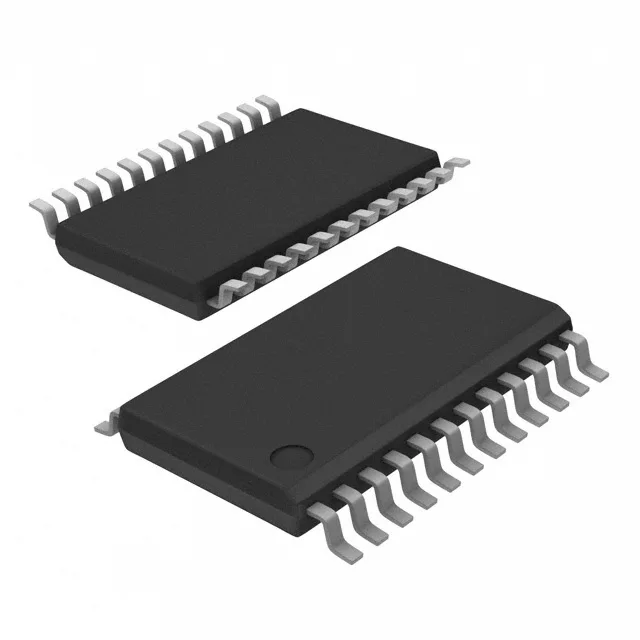
Texas Instruments CDCE949PWR — Clock & Timing ICs

TI CDCE949PWR PLL Clock Generator, 230 MHz, 24-TSSOP

MPNCDCE949PWR
Active

Texas Instruments CDCE949PWR, PLL Clock Generator, 4-PLL VCXO, LVCMOS, 230 MHz max, 1.7V–1.9V, 1:9 fanout, -40°C–85°C, 24-TSSOP.

$5.8100Ref. price · indicative, final on quote
Packaging24-TSSOP (0.173", 4.40mm Width)
RoHSROHS3 Compliant
Independent supplier — new & surplus stockAuthenticity-screened · ESD-safe packingListing updated Aug 2026

Specifications

CDCE949PWR specifications
ParameterValue
TypePLL Clock Generator
MountingSurface Mount
Supply voltage1.7V ~ 1.9V
Frequency - max230MHz
Operating temperature-40°C~85°C
PLLYes with Bypass
InputLVCMOS, Crystal
OutputLVCMOS
PackageTape & Reel (TR); Cut Tape (CT)
Case24-TSSOP (0.173\", 4.40mm Width)
Divider (Multiplier)Yes/No
Number of circuits1
Ratio - Input:Output1:9
Differential - Input:OutputNo/No

Product details

230 MHz PLL clock generator with 1:9 fanout

The Texas Instruments CDCE949PWR is a 4-PLL VCXO clock generator that accepts an LVCMOS or crystal input and delivers up to nine LVCMOS outputs at frequencies up to 230 MHz. It integrates four PLLs with bypass capability, a divider chain, and a 1:9 input-to-output ratio — essentially a clock source and fanout buffer in one 24-TSSOP package. This part is aimed at systems that need multiple clean clock domains from a single reference: networking gear, base stations, test equipment, and FPGA-based designs where a single oscillator must feed several PLLs or clocked blocks.

If your board already has a 1.8 V rail, the CDCE949PWR can run directly from it without an extra regulator. A clean, low-noise 1.8 V supply is assumed; any ripple on that rail will appear on the output clocks as jitter.

It is not specified for automotive (no AEC-Q grade) or extended-temperature applications.

Frequently asked questions

What is the maximum frequency of CDCE949PWR?

The maximum output frequency is 230 MHz. This is the ceiling for the LVCMOS outputs; the PLLs and dividers can generate lower frequencies from that maximum.