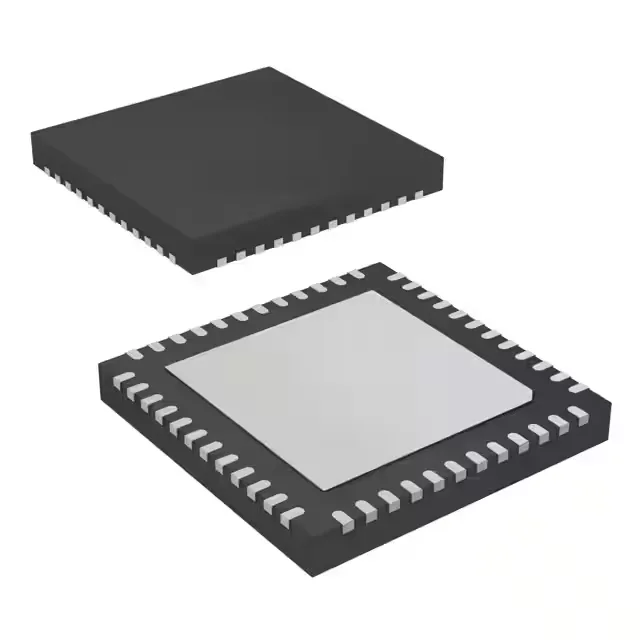
The Texas Instruments CDCE18005RGZR is a clock generator that handles differential and single-ended inputs (LVCMOS, LVDS, LVPECL) and outputs the same standards, with a maximum frequency of 1.5 GHz. That 1.5 GHz ceiling puts it squarely in the high-speed serial-data and RF-IF distribution space — think 10G Ethernet reference clocks, JESD204B SYSREF, or ADC/DAC sample clocks where jitter and edge rate matter. The 3:10 fanout ratio means a single device can replace a bank of fanout buffers, saving board area and reducing trace-length mismatch across the clock tree.
I/O flexibility and supply rails
Both input and output support LVCMOS, LVDS, and LVPECL, so it can sit between a crystal oscillator and a SerDes PHY, or between an FPGA and a set of high-speed converters, without external level translation. The differential I/O capability is a strong signal that the part is intended for noise-immune clock distribution over longer board traces.
Package and temperature — board-fit realities
The 48-VFQFN with exposed pad is a 7x7 mm body — a common footprint for high-speed clocking parts. The surface-mount package is standard for reflow assembly;.