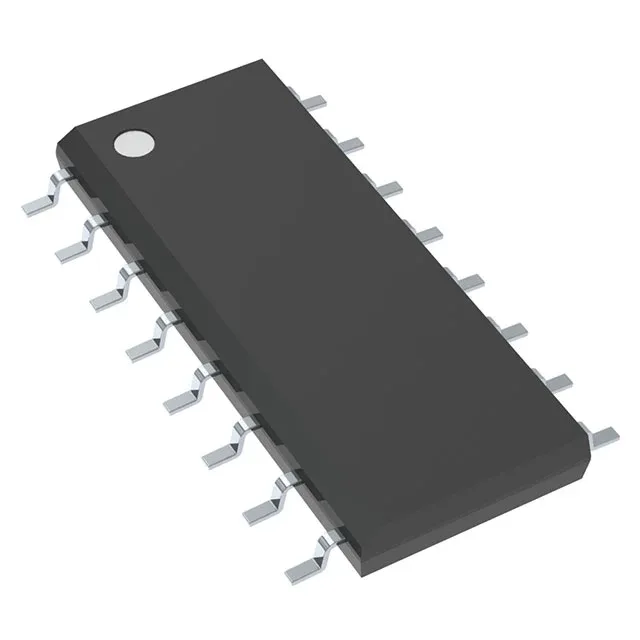
Texas Instruments CD4054BM — Analog & Data Acquisition

CD4054BM LCD Driver IC, 4 Segment, 3V-18V, 16-SOIC, Active

MPNCD4054BM
End of Life

Texas Instruments CD4054BM LCD driver, 4 segment, 3V to 18V supply, 40 nA supply current, 16-SOIC package, -55°C to 125°C operating temperature, active lifecycle, tube.

$1.07Ref. price · indicative, final on quote
Packaging16-SOIC (0.154", 3.90mm Width)
RoHSROHS3 Compliant
Independent supplier — new & surplus stockAuthenticity-screened · ESD-safe packingListing updated Aug 2026

Specifications

CD4054BM specifications
ParameterValue
Display typeLCD
MountingSurface Mount
Supply voltage3V ~ 18V
Current - supply40 nA
Operating temperature-55°C ~ 125°C
PackageTube
Configuration4 Segment
Case16-SOIC (0.154\", 3.90mm Width)

Product details

The Texas Instruments CD4054BM is a 4-segment LCD driver in a 16-SOIC package, designed to drive liquid crystal displays from a single supply rail. It accepts a 3V to 18V supply range, which covers everything from a 3.3V logic rail up to a 12V or 15V industrial bus.

Supply voltage and low-power behaviour

The 3V to 18V supply span is wide enough to let the CD4054BM run on the same rail as a 5V microcontroller, a 12V industrial supply, or a 3.6V lithium cell without a level shifter. The 40 nA supply current is the standby draw — the actual operating current depends on the display loading and clock rate, but the quiescent floor is low enough that the driver will not dominate a battery budget. For a 4-segment numeric or alphanumeric LCD, the CD4054BM provides the segment drive without needing a negative rail or external charge pump.

It is ROHS3 compliant, so no conflict with EU or California regulatory requirements.

Frequently asked questions

What is the CD4054BM used for?

The CD4054BM is a 4-segment LCD driver — it drives four segments of a liquid crystal display from a single supply. Typical applications include numeric or alphanumeric readouts on handheld instruments, panel meters, thermostats, and other devices where a low-power, wide-voltage-range display driver is needed.