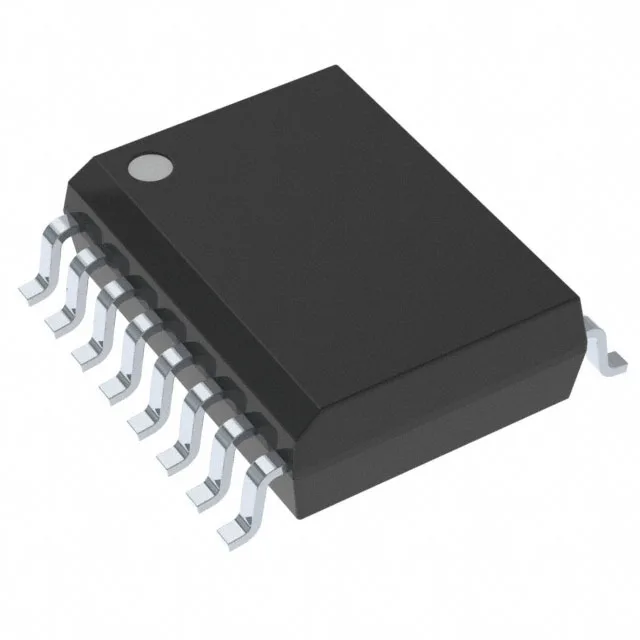
What this hex buffer does on your board
The CD4050BDW is a six-channel non-inverting buffer from the 4000B series, each channel handling one bit with push-pull output. Supply range spans 3V to 18V, making it suitable for interfacing legacy 5V logic to 3.3V or 12V peripherals without a separate level shifter. Outputs source 8 mA and sink 48 mA per channel, enough to drive a standard logic input or a small LED indicator directly. The wide-body 16-SOIC package (0.295" width) and surface-mount footprint fit standard PCB assembly lines. Operating temperature covers -55°C to 125°C, so the part can sit in an engine bay, a satellite power supply, or a downhole tool without derating concerns.
Supply voltage — why 3V to 18V matters
A buffer that runs from 3V to 18V means you can use it on a mixed-voltage board without adding a secondary regulator for the logic rail. The 4000B family is known for its wide supply tolerance, and this part takes full advantage: it works with a 3.3V microcontroller output on one side and a 12V industrial sensor input on the other. No level translation IC needed between them — just the buffer.
Output drive — 8 mA source, 48 mA sink
The asymmetric drive — 8 mA sourcing, 48 mA sinking — is typical of CMOS buffers optimised for driving capacitive loads or TTL inputs. The higher sink current handles fan-out to multiple CMOS gates or a relay driver transistor. If you need to drive a heavy load like a small relay coil, you will want an external transistor; the buffer itself is a signal-level part, not a power driver.
This is the same temperature grade used in avionics, missile guidance, satellite power management, and downhole drilling instrumentation.
ROHS3 compliant, so it meets current European and global environmental directives.