16-bit ADC with PGA — why it matters for low-level signals
It accepts differential or single-ended inputs through an input multiplexer that routes to the PGA and then to the ADC core. The PGA allows measuring small-amplitude signals — thermocouple outputs, shunt voltages, strain-gauge bridges — without an external amplifier stage, because you can amplify the signal before conversion inside the chip.
860 SPS sampling — is it fast enough for your loop?
The ADS1115IDGST samples at 860 samples per second maximum. That is a 1.16 ms conversion time — fine for temperature monitoring, battery voltage logging, or panel-mount sensor readouts. It will not keep up with audio or motor-current phase capture; those need a SAR converter in the MHz range. For a 50 Hz or 60 Hz mains ripple measurement, the internal digital filter provides good rejection at those line frequencies.
Supply range and interface — 5V microcontroller ready
Both the analog and digital supply pins accept 2V to 5.5V from the same rail. The I²C interface operates at the same supply voltage, so it connects directly to 5V logic without level shifters — the SDA and SCL pins are 5V-tolerant when the supply is at 5V.
Temperature grade and package — industrial and rework considerations
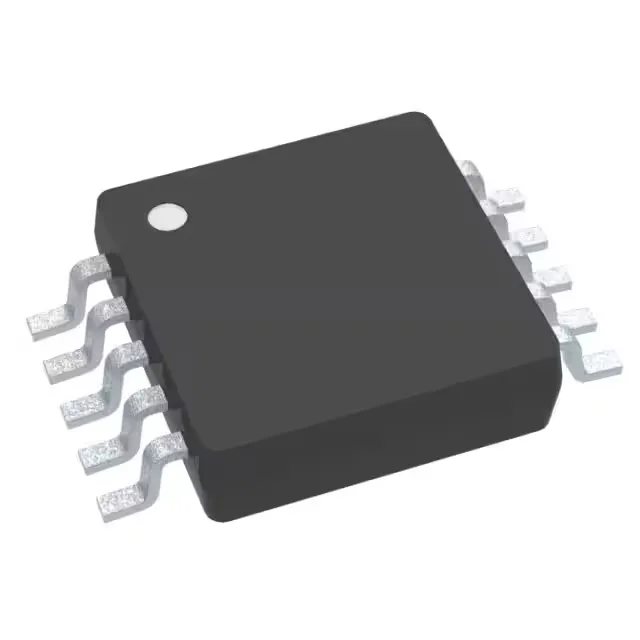
The 10-VSSOP package has a 0.50 mm lead pitch — a standard hot-air rework station with a fine tip can remove and replace it, but the small body demands careful alignment during hand-soldering.