Active production, automotive-qualified TVS — what 1500 W means on the line
The 1.5SMC10CAHM6G: That 1500 W rating means it can clamp a transient that dumps 108 A into the diode — the clamping voltage holds at 14.5 V max under that current, so a 12 V nominal rail sees the spike clipped well before it reaches downstream silicon. AEC-Q101 qualification puts this in the automotive grade bucket — the part is screened for the -55°C to 150°C junction temperature range and the reliability stress tests that under-hood and chassis-mounted modules require. For a BOM that needs PPAP traceability or a known reliability pedigree, this is the differentiator over a commercial-grade TVS with the same electrical ratings.
DO-214AB (SMC) package — field-swap and rework reality
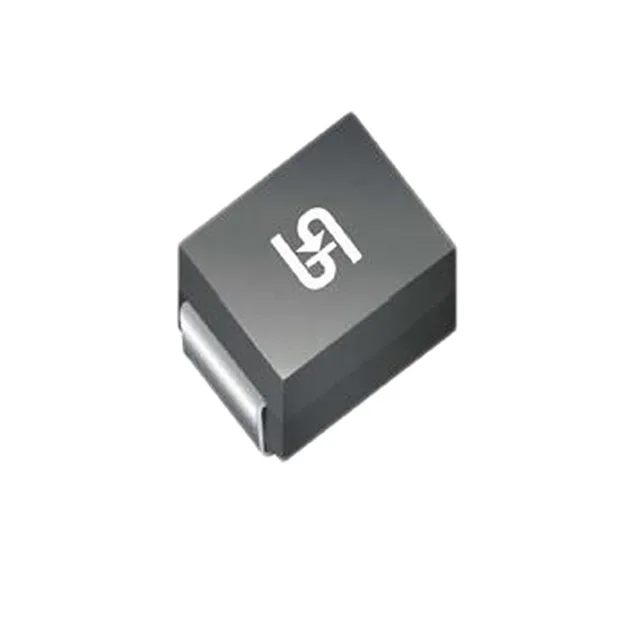
The DO-214AB (SMC) package is a standard surface-mount footprint shared across the 1.5SMC family. It is a two-terminal part with the cathode band on one end — orientation is unambiguous, and the body is large enough to read the marking without magnification. On a rework bench, a hot-air station with a fine nozzle lifts it cleanly; the solder pads are wide enough that wicking braid clears the land without lifting the pad. Tape-and-reel packaging is the standard delivery for automated pick-and-place.
Protection envelope — standoff, breakdown, and clamping
Breakdown starts at 9.5 V minimum, so a 12 V battery rail with a 9 V nominal accessory bus is within the window. Power line protection is marked 'No' — this is a TVS for signal or low-power supply rails, not for direct mains or high-energy industrial bus protection. The bidirectional channel means it clamps both polarities symmetrically, which suits AC-coupled signals or lines that swing below ground.