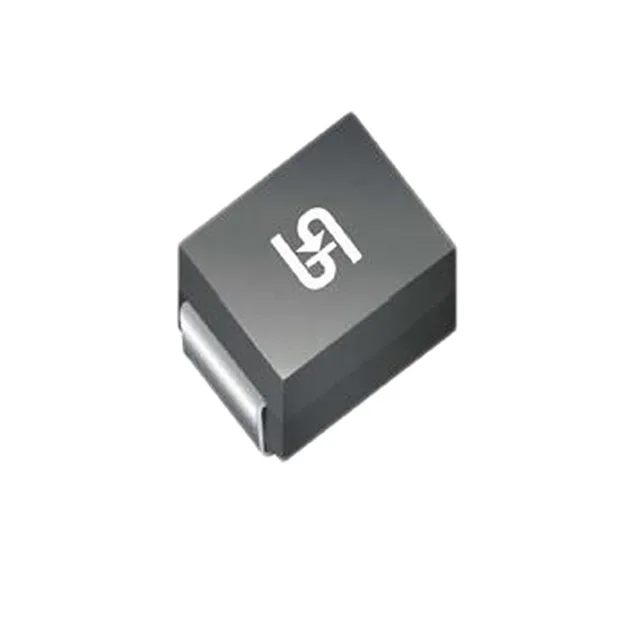
Why the AEC-Q101 qualification and -55 to 175 °C junction range matter
The 5.0SMDJ64AHM6G: AEC-Q101 is the automotive discrete semiconductor qualification — it certifies the part passed temperature cycling, humidity bias, and surge life testing at the grade 1 temperature band. The listed operating range of -55 °C to 175 °C junction temperature matches the under-hood ambient envelope where an ECU mounted near the engine block sees cold-soak starts and sustained elevated temperatures in the same duty cycle. Grade 1 qualification at 150 °C ambient is the floor for this class of deployment; the 175 °C junction limit gives margin above that ambient ceiling.
Standoff, breakdown, and clamping — the TVS action explained
The reverse standoff voltage of 64 V is the maximum normal operating voltage the diode sees without conducting. This is the TVS clamping action — it does not regulate like a standard Zener reference diode; it sits idle at standoff and absorbs transient energy by clamping. The single unidirectional channel means protection works in one polarity only; a bidirectional transient requires a different polarity configuration or a separate diode.
DO-214AB SMC package and surface mount integration
Surface mount termination suits high-volume pick-and-place assembly with tape-and-reel or cut-tape packaging. The cathode pad on the PCB layout should match the datasheet land pattern for reliable solder joint integrity under thermal cycling, particularly at the automotive temperature extremes.