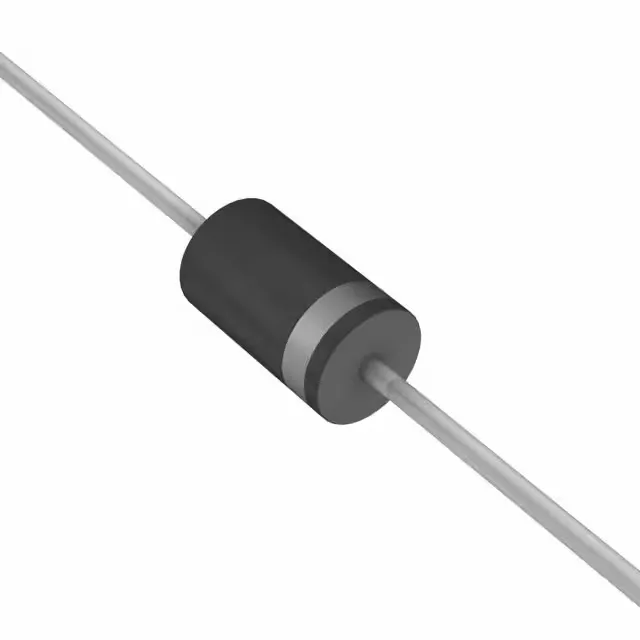
1.5 kW bidirectional transient suppressor, AEC-Q101 qualified
The 1.5KE9.1CAHR0G: The -55 to +175 °C operating junction temperature covers the full automotive ambient range with margin for self-heating during a surge.
At the 13.4 V clamp, the TVS holds the transient below the typical absolute-max rating of a 12 V bus-powered ECU — the 7.78 V standoff means the diode does not conduct under normal 12 V system ripple, only above the breakdown threshold of 8.65 V minimum. The 117 A peak pulse current (Ipp) at 10/1000 µs is the current the device can shunt into the clamp without exceeding the 1500 W power limit. For a shorter pulse (8/20 µs, common in ESD testing), the peak current capability is higher — the 10/1000 µs waveform is the more conservative automotive transient spec.
DO-201 axial package — board-fit and thermal path
The DO-201AA (DO-27) axial-lead package is a through-hole form factor with a 0.052-inch diameter leads and a body length of about 7.6 mm. The copper tab at each end carries the current; the thermal resistance to ambient depends on the lead length and the PCB copper area — shorter leads and larger pads lower the junction temperature during repetitive surges. For a single 1500 W pulse, the junction temperature rise is approximately 100 °C above ambient — within the 175 °C absolute maximum. For repetitive pulsing, the average power must stay below the 6.5 W steady-state rating at 25 °C, derated linearly above that.