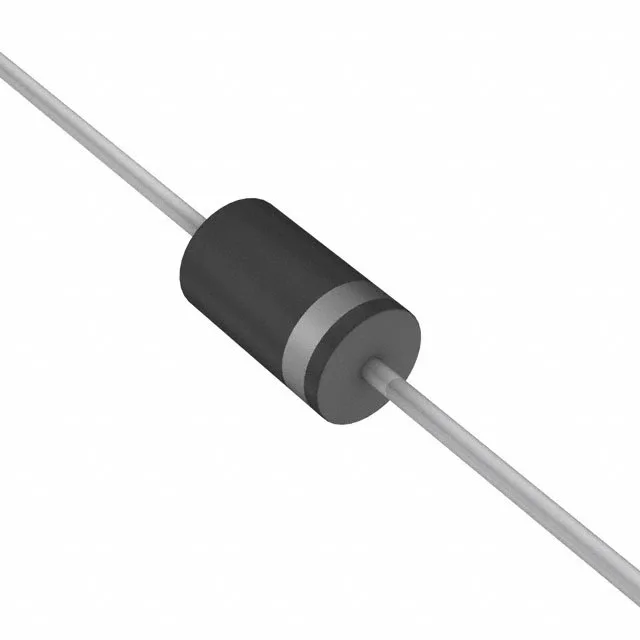
Automotive-grade transient suppressor for 48V nominal rails
The 1.5KE56CAHA0G: Its 47.8V reverse standoff voltage and 77V clamping point make it a fit for protecting 48V nominal DC buses in automotive electronics — the standoff sits above the rail's steady-state maximum, while the clamp catches load-dump and inductive kick transients before they reach downstream silicon.
What the clamping and breakdown specs mean for a 48V bus
The 47.8V reverse standoff voltage is the maximum DC voltage the TVS can hold without conducting — it sits above the 48V nominal rail's tolerance band (typically 52-54V max for a regulated bus). The minimum breakdown voltage of 53.2V gives a guard band above the standoff, ensuring the device stays off during normal operation. When a transient exceeds breakdown, the clamping voltage of 77V at the 20A peak pulse current limits the voltage seen by the protected circuit. Bidirectional construction means the device clamps equally in both polarities — useful for AC-coupled lines or DC buses where reverse-polarity events are a risk. A single device replaces two unidirectional TVS diodes in anti-series, saving board space and bill-of-materials count.
Package and board integration
The DO-201AA (DO-27) axial-lead through-hole package is a standard form factor for high-reliability power-supply and automotive PCB layouts. The axial body allows manual or wave-solder assembly; the lead diameter and body length are compatible with existing 1.5KE-series footprints. Tape & Box packaging supports automated insertion for volume production.