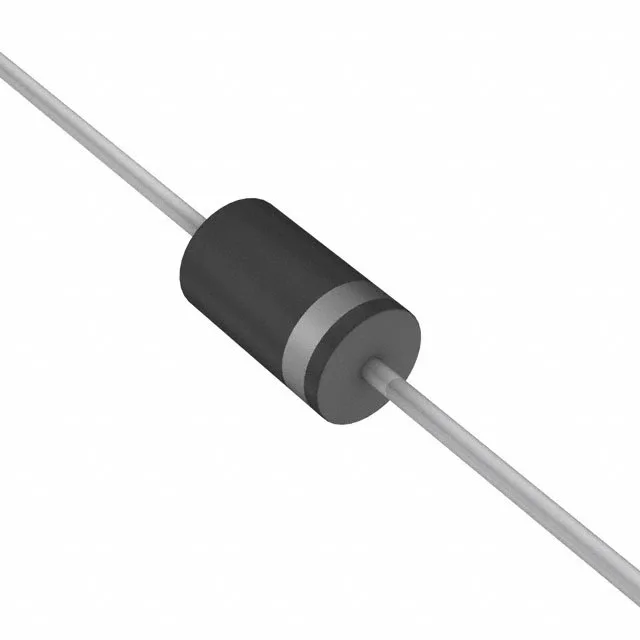
The 1.5KE43CAHB0G: That means you can design it into a new automotive ECU or a replacement run without worrying about a forced migration mid-production.
1.5 kW peak pulse — what the 59.3 V clamp means for a 36.8 V rail
The reverse standoff voltage is 36.8 V — the rail it protects should never exceed this in steady state. When a transient hits, the device clamps at 59.3 V maximum while conducting 26 A of peak pulse current. For a 36.8 V nominal supply — common in 36 V battery systems or 28 V regulated buses with headroom — the 59.3 V clamp sits well below typical downstream component abs-max ratings (often 60-65 V for automotive-rated ICs). The 26 A peak current capability means it absorbs the surge without the part self-destructing, provided the PCB trace and upstream fuse or PTC can deliver that current momentarily.
AEC-Q101 — the under-hood temperature grade
Qualified to AEC-Q101, the automotive discrete semiconductor stress-test qualification. It sits in a single hole on the PCB — the anode band marks the cathode end for the unidirectional variant; on this bidirectional part the band is still present but the device conducts symmetrically. Bulk packaging means it ships loose in a bag or tube, not taped and reeled — factor that into your pick-and-place setup if you are hand-inserting or using a tube feeder.
Bidirectional — one part covers both polarities
A single bidirectional channel means the same device clamps a positive or negative transient with symmetrical breakdown and clamping voltages. Power line protection is marked as 'No' — this is not a dedicated surge-rated device for AC mains or high-energy industrial busbars. It is designed for the transient energies typical of automotive 12/24/36 V systems, not for direct lightning or grid-coupled surges.