What an AEC-Q101 Grade Means for the 342V Rail
The 1.5KE400AHA0G is an automotive-grade Zener TVS diode from the 1.5KE series, qualified to AEC-Q101 — the discrete semiconductor counterpart to AEC-Q100. This means the device has passed the full suite of automotive stress tests: high-temperature reverse bias, temperature cycling, and ESD robustness up to the human-body-model level specified in the standard. For a procurement engineer auditing a BOM, the AEC-Q101 certificate and PPAP documentation are the deliverables that clear the component for use in underhood or cabin-domain ECU modules where a field failure creates a safety recall path.
Protection Envelope: 342V Standoff, 548V Clamp, 2.8A Peak
When a transient exceeds the breakdown threshold (380V minimum), the diode clamps the surge to 548V maximum while shunting 2.8A of peak pulse current (10/1000µs waveform). This is the figure the test engineer uses to validate the margin against the system's surge-withstand specification, typically IEC 61000-4-5 or ISO 7637-2 pulse levels.
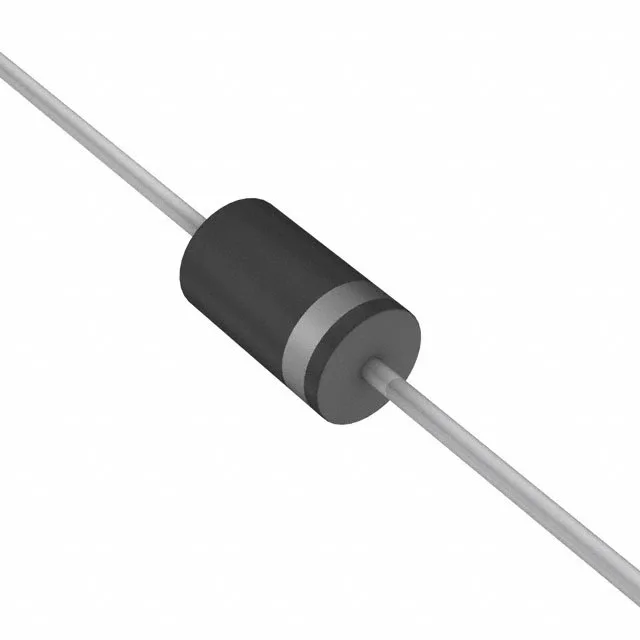
Through-Hole DO-201 Package and Board-Level Fit
The DO-201AA (DO-27) axial-lead through-hole package mates into plated through-holes on a PCB or terminal block. The package body is rated for the full 175°C junction temperature, so the solder joint temperature during wave or hand-soldering must not exceed the component's peak profile — standard 260°C for 10 seconds per JEDEC J-STD-020 applies. The axial leads suit point-to-point wiring on a terminal strip or a board-level socket, common in automotive power distribution boxes and industrial control panels where a through-hole joint survives vibration better than a surface-mount solder fillet.