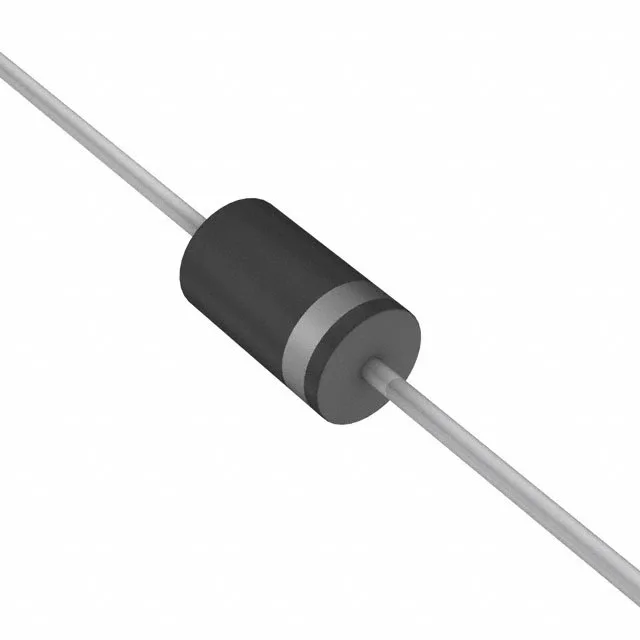
1500W peak pulse — what the rating means for circuit protection
The 1.5KE250CAHB0G: The 4.5 A peak pulse current at that waveform is the current the device can shunt without exceeding the 344 V clamping voltage. For a 24 V automotive system this is overkill; the part is sized for higher-voltage rails — 170 VDC nominal bus, 120 VAC rectified lines, or traction battery packs in the 200 V range. Clamping at 344 V means the protected circuit must have components rated for at least that voltage during a surge event. The breakdown voltage is specified at 237 V minimum — the device starts conducting between 237 V and the clamping ceiling.
AEC-Q101 — the automotive-grade differentiator
The HB0G suffix marks this as AEC-Q101 qualified — the automotive discrete semiconductor stress test qualification. This means the part has passed temperature cycling, high-temperature reverse bias, and ESD screening per the AEC-Q101 standard. The commercial 1.5KE250CA (non-HB0G) lacks this qualification and the associated PPAP traceability. An under-hood ECU that sees 125°C ambient still has 50°C of junction margin before the derating curve takes effect.
DO-201 axial — through-hole for high-reliability assembly
Packaged in DO-201AA (also known as DO-27) axial leaded form, supplied in bulk. The through-hole footprint is standard across the 1.5KE family — a single PCB pad layout serves the whole 1.5 kW range from 6.8 V to 440 V standoff. The axial leads handle the surge current without the trace-thickness constraints of an SMD package. The Power Line Protection flag is set to No, confirming this is designed for signal and DC bus protection, not for mains AC line clamping.