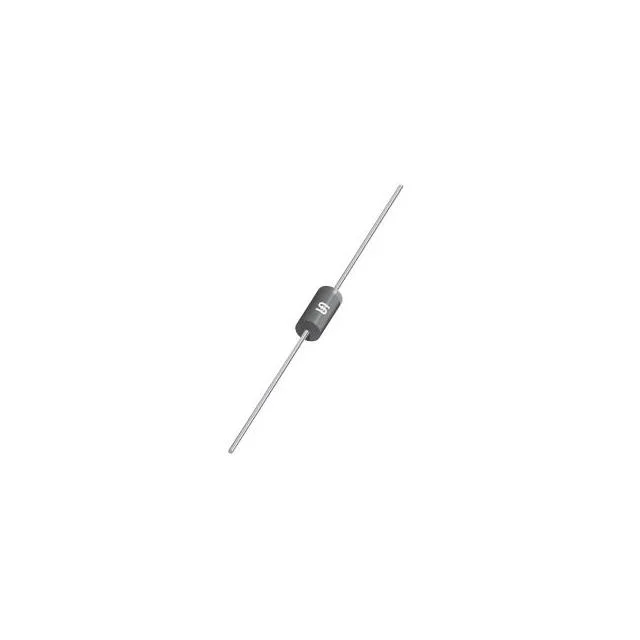
1500W peak pulse clamp for 130V rails
The 1.5KE160H: That's the number that matters for the board's survival — the 1500W rating is the energy the diode absorbs, but the clamp voltage tells you whether the protected IC's abs-max rating is safe.
AEC-Q101 and the -55 to 175°C operating range
This part carries AEC-Q101 qualification, the automotive-grade stress and reliability standard for discrete semiconductors. It's screened for temperature cycling, high-temperature reverse bias, and ESD robustness beyond commercial-grade parts — the kind of qualification you need for an ECU, BMS, or motor controller that sees under-hood ambient and cold-crank dips. The operating junction temperature range spans -55°C to 175°C, which covers the full automotive temperature profile including the hot soak after engine shutdown. At 175°C junction, the leakage current rises, but the clamping action still holds — the derating curve in the datasheet shows the peak pulse power derates linearly above 25°C.
DO-201 axial package and through-hole mounting
Housed in a DO-201AA (DO-27) axial-lead package, the 1.5KE160H is a through-hole part — the leads go into plated through-holes on the PCB, and the body sits above the board. The axial format handles the thermal cycling of high-energy pulses better than a surface-mount equivalent because the leads absorb some of the mechanical stress from the expansion and contraction. The package is supplied in tape-and-reel for automated insertion, but it's also available in bulk or cut tape for prototype builds. The DO-201 footprint is standard — the anode end is marked with a band, and the cathode lead goes to the protected rail while the anode connects to ground.
Active production, sourced to order
That means it's available through both authorized distribution and independent channels, and the supply chain is stable for existing designs and new builds alike.