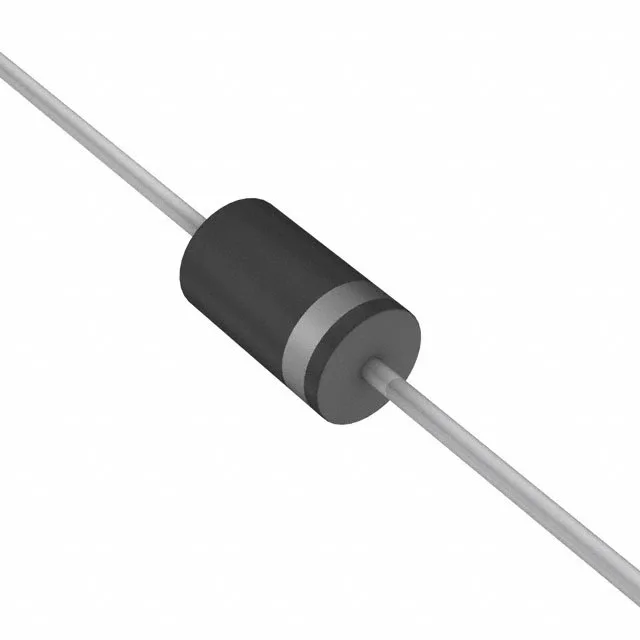
Automotive-grade transient suppressor for 136V rail protection
The 1.5KE160AHA0G: Its 136V reverse standoff voltage places it on nominal 120V or 130V DC rails — common in EV battery-management systems, 48V board-net converters, and industrial 110V DC buses — where the 219V clamping point at 7.1A (10/1000µs waveform) keeps the downstream silicon inside its avalanche rating. The 1500W rating is the peak pulse power at the 10/1000µs test condition; real-world surge duration shorter than 1 ms allows higher peak current before the junction reaches 175°C. The single unidirectional channel means polarity matters — the cathode band marks the protected rail, and the anode ties to ground.
AEC-Q101 qualification and the thermal envelope
The 175°C TJ max is the absolute ceiling; continuous operation near that limit requires derating the peak pulse power per the datasheet curve, but the 1500W rating is already specified at 25°C. The DO-201AA (DO-27) axial-lead package is a through-hole footprint that has been a de facto standard in automotive and industrial suppressor sockets for decades. The lead diameter and body length match the existing PCB hole pattern for 1.5KE-series replacements — no board spin for a drop-in swap from other 1.5KE-branded parts at the same voltage.
Breakdown voltage is guaranteed at 152V minimum — the device starts conducting at this threshold, shunting the transient current away from the load. A downstream MOSFET or IC rated for 250V drain-source or input has margin; a 200V-rated device is at the edge and may need a second-stage clamp. Power line protection is listed as 'No', which means this TVS is not designed for continuous AC mains clamping — it is a transient suppressor for DC rails, signal lines, or low-frequency AC circuits where the standoff voltage is not exceeded during normal operation.