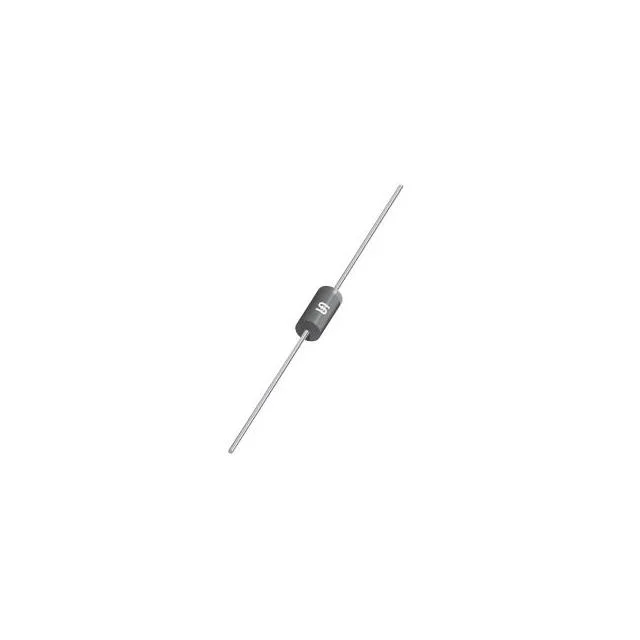
1500W Zener TVS with AEC-Q101 automotive qualification
The 1.5KE13H: With a 10.5V reverse standoff voltage and a 19V maximum clamping voltage at 82A peak pulse current, it protects downstream circuitry from transients up to that energy level without exceeding the junction's thermal limit.
Clamping voltage and pulse current — what the ratings mean for the BOM
The 19V clamping voltage at 82A peak pulse current (10/1000 µs) sets the protection ceiling: any transient that would push the line above 19V is shunted through the diode. For a 12V automotive rail, the 10.5V standoff sits comfortably above the nominal bus, so the diode stays off during normal operation and only conducts during a surge event. The 1500W peak pulse rating is the energy the part can absorb in a single 10/1000 µs pulse without failing. In a real load-dump or inductive-kick scenario, the actual power dissipated is the product of the clamping voltage and the surge current — this rating confirms the die and bond wires can handle that instant without opening. No power line protection (the part is not designed for continuous overvoltage clamping on AC mains) — it is a transient suppressor for DC buses and signal lines where the event duration is measured in microseconds.
DO-201 axial package — rework and board-fit considerations
The DO-201AA (DO-27) axial-lead package is a through-hole form factor that survives hot-air rework well — the leads dissipate heat into the board, and the glass-passivated die is mechanically robust. Pin 1 is the cathode band; orientation is unambiguous on the part body, so a hand-replacement after a surge event is straightforward.